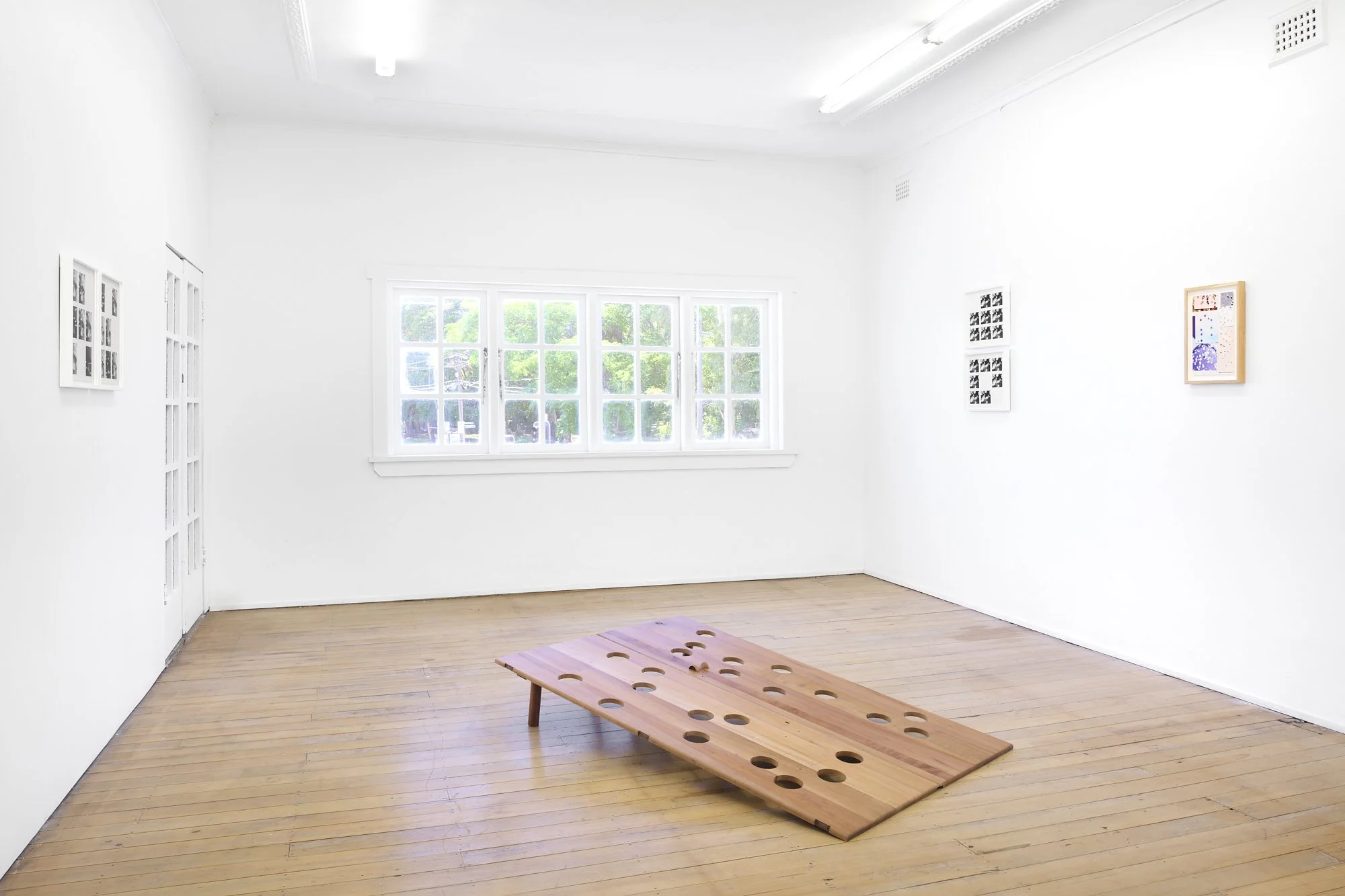
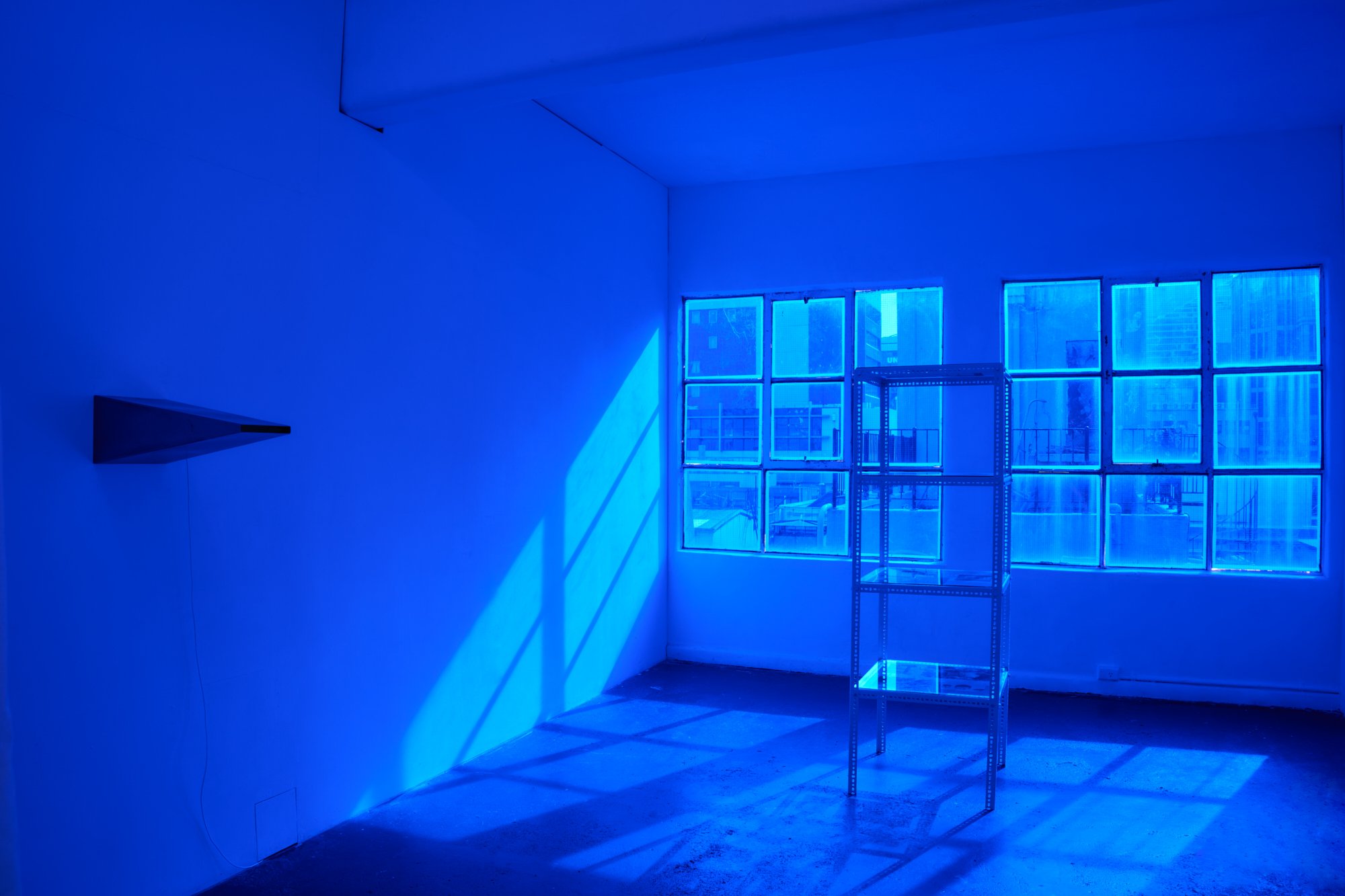
Installation view: ‘Continuous Present’ solo presentation at LAILA Sydney, Everything’s the Same, Everything’s Different, 2025, repurposed antique teak doors, sanded, stained, CNC-cut circular forms, with custom timber legs,165 × 54 × 25 cm each; Blind spots in the linear trajectory, 2025, silver gelatin print on fibre matte paper (multiple exposures), hand-finished white lacquered oak frame, raised float mount, ArtGlass AR70. 33.2 x 40.8 cm; Divergences (4), 2025, Archival pigment print on cotton rag, hand-finished cherry frame, museum mount, ArtGlass AR70 30 x 41.7 cm; Diplopia (1+2), 2025, Silver gelatin print on fibre matte paper (multiple exposures), hand-finished white lacquered oak frame, raised float mount, ArtGlass AR70, 33.2 × 40.8 cm. Documentation Aaron Rees.
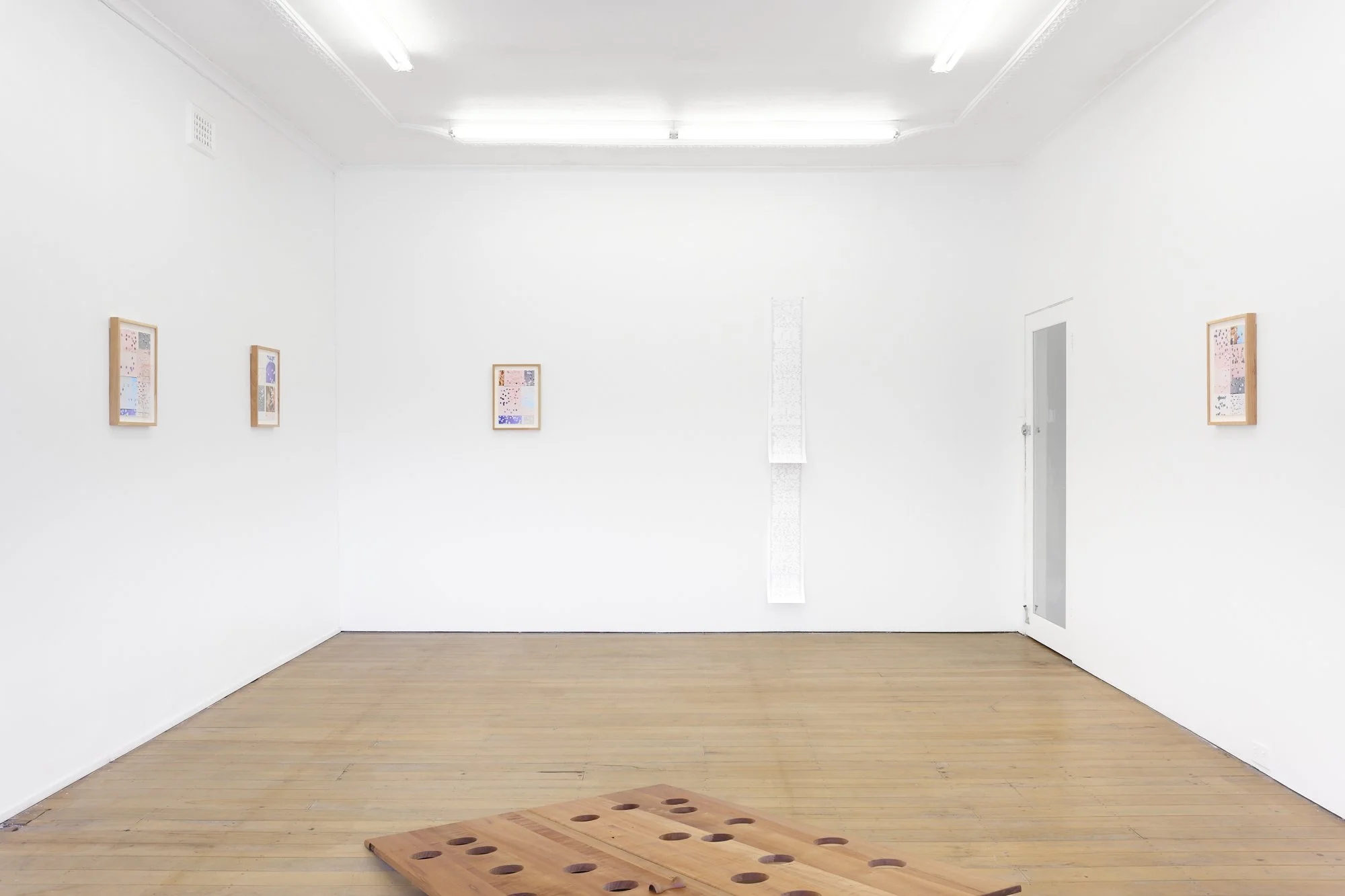
Installation view: ‘Continuous Present’ solo presentation at LAILA Sydney, Everything’s the Same, Everything’s Different, 2025, repurposed antique teak doors, sanded, stained, CNC-cut circular forms, with custom timber legs. Divergences (1-3 + 5), 2025, Archival pigment print on cotton rag, hand-finished cherry frame, museum mount, ArtGlass AR70 30 x 41.7 cm. 1001 Over Simplifications, 2025, collaborative work with Lucy Swan, archival print on Canson paper, 110 x 24 cm each piece.
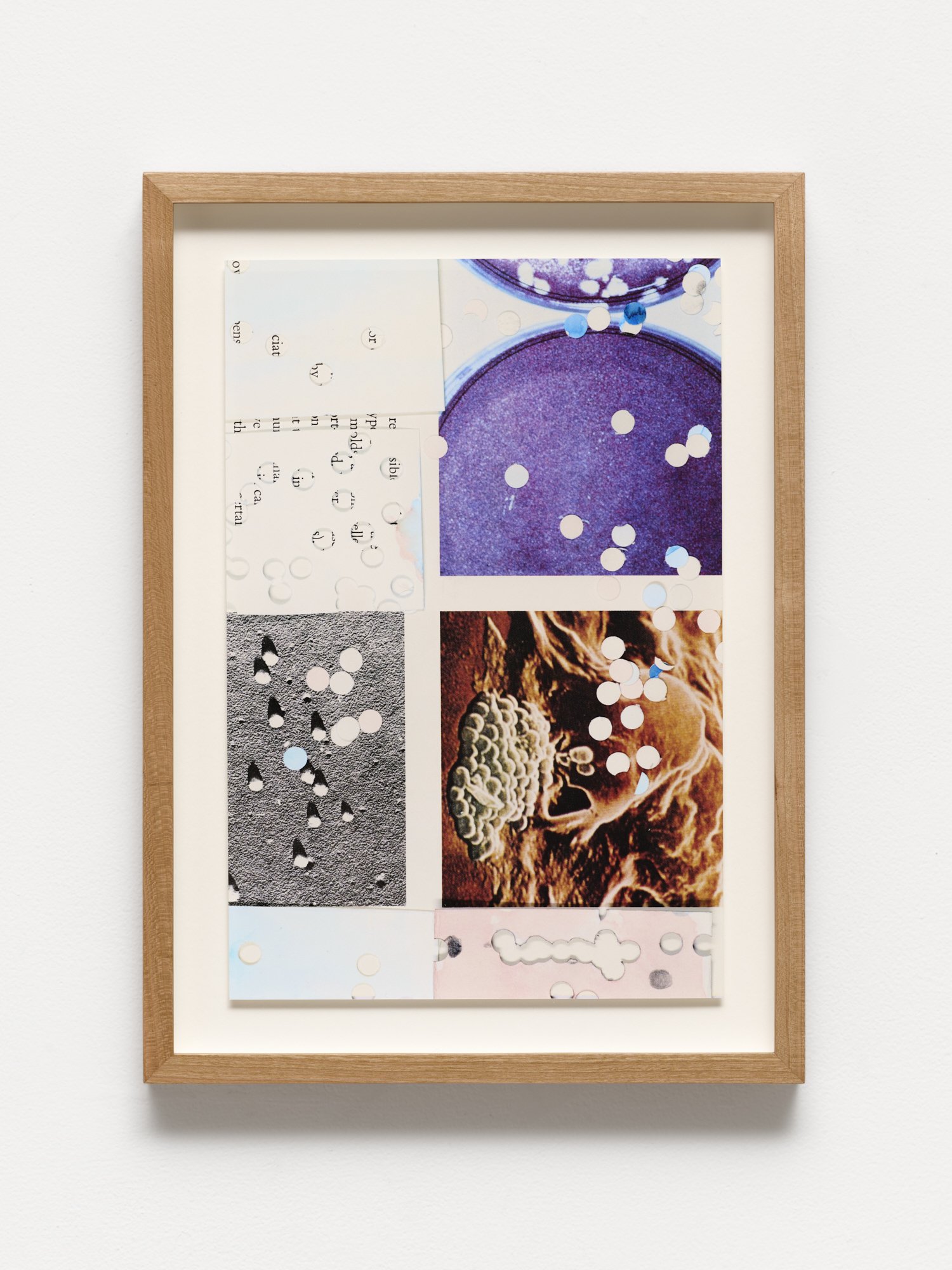
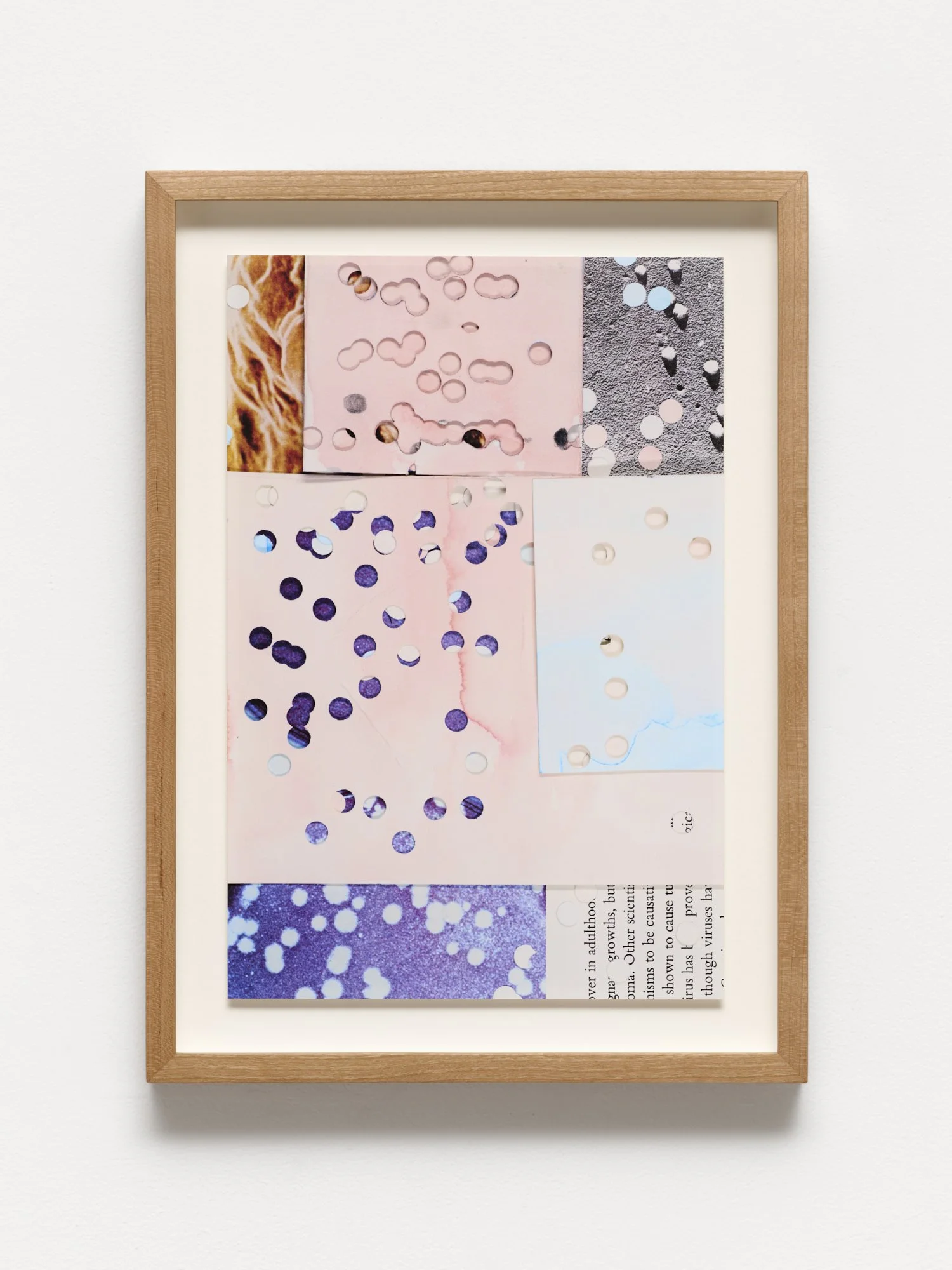
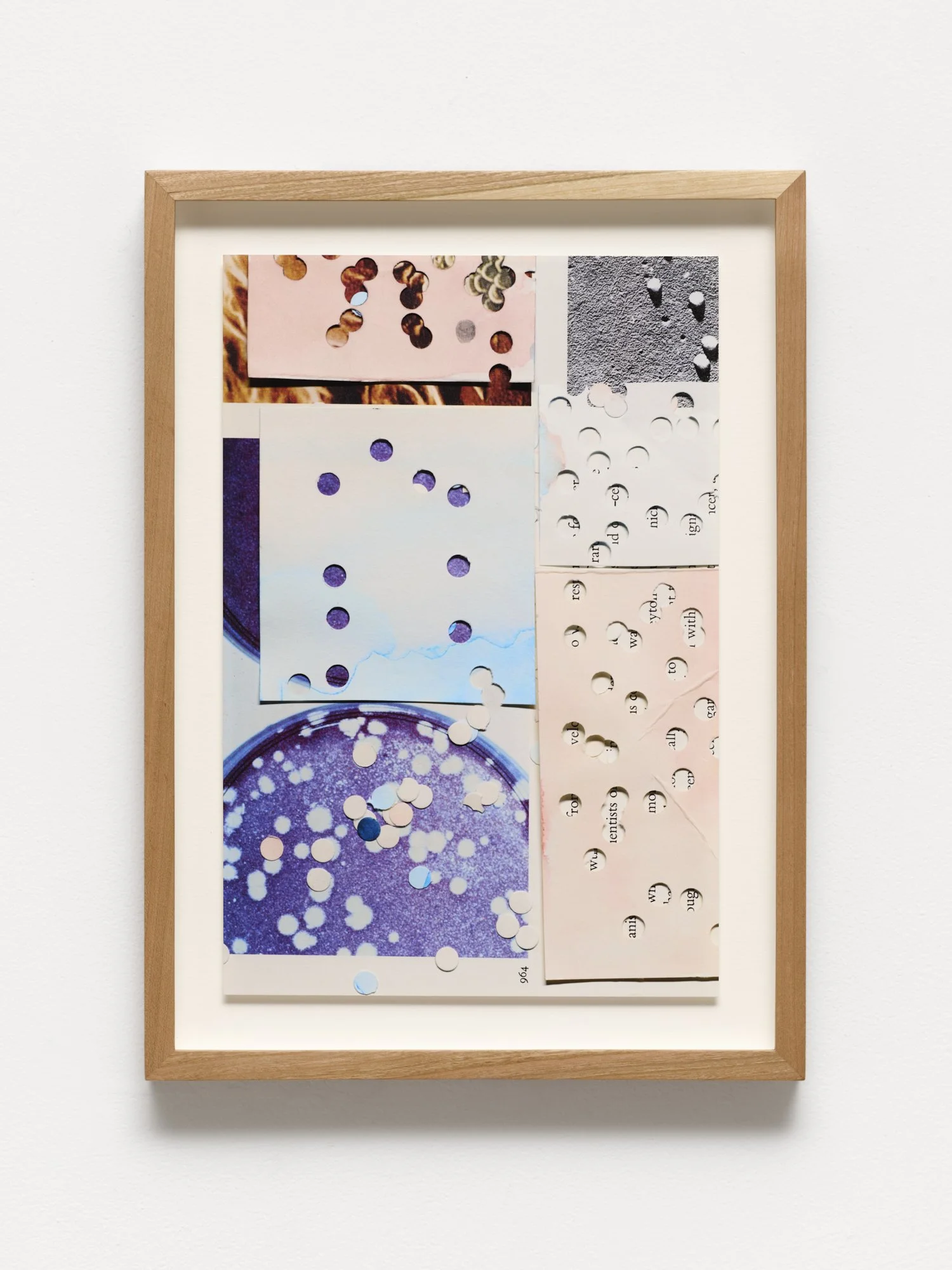
Divergences (2, 1, 4), 2025, Archival pigment print on cotton rag, hand-finished cherry frame, museum mount, ArtGlass AR70 30 x 41.7 cm, as part of solo presentation ‘Continuous Present’ at LAILA Sydney.
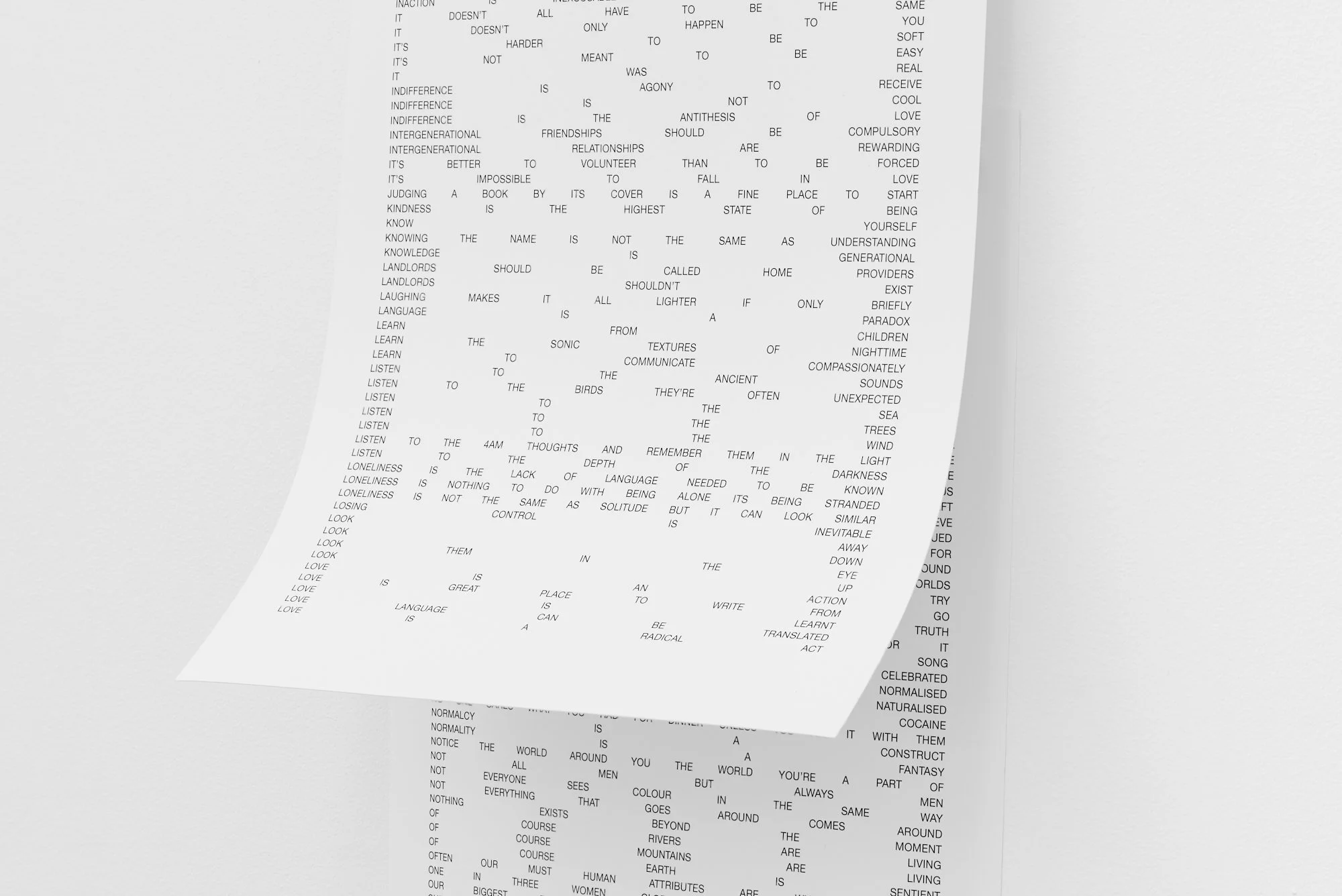
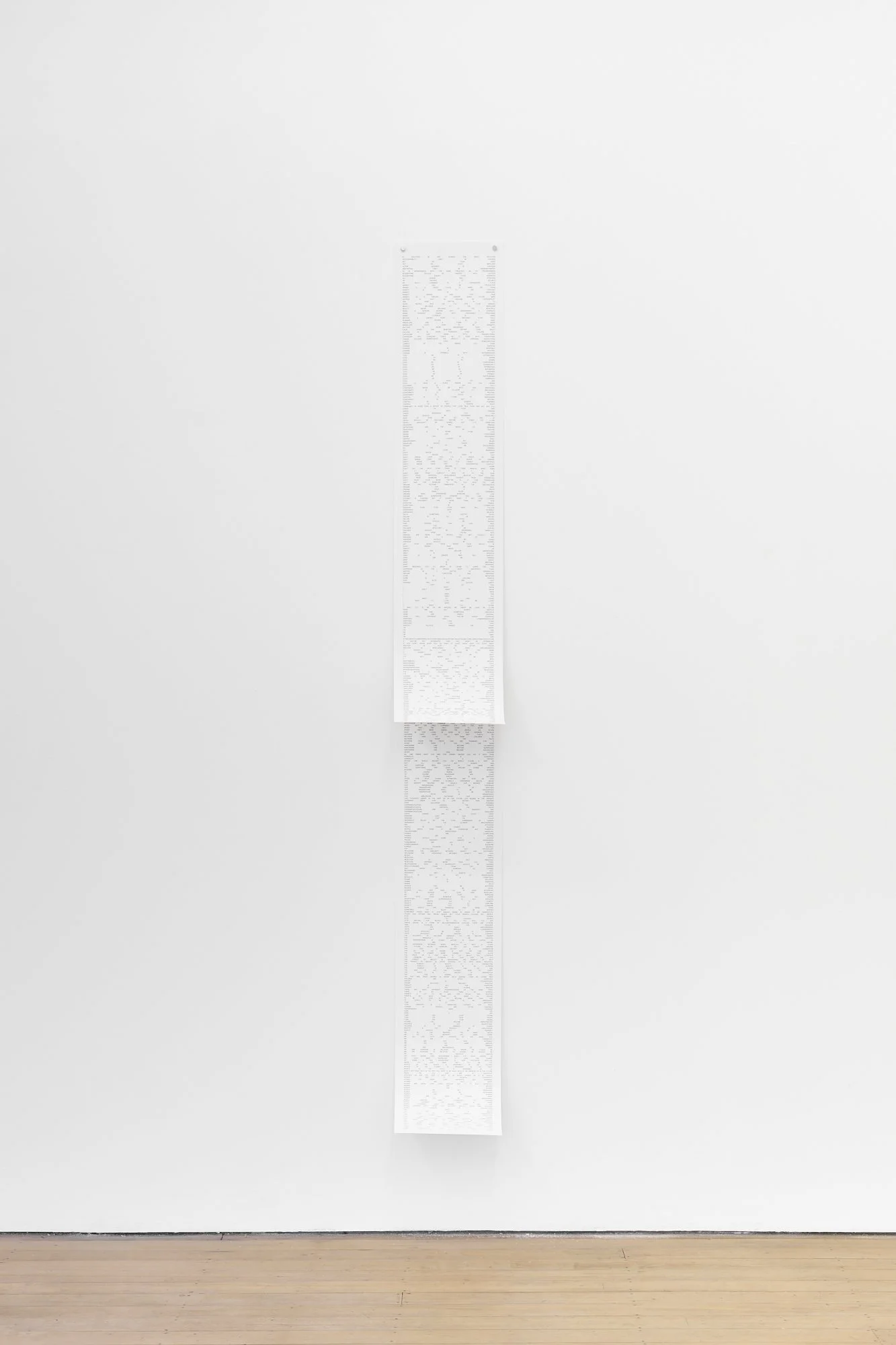
1001 Over Simplifications, 2025, collaborative work with Lucy Swan, archival print on Canson paper, 110 x 24 cm each piece, as part of solo presentation ‘Continuous Present’ at LAILA Sydney.
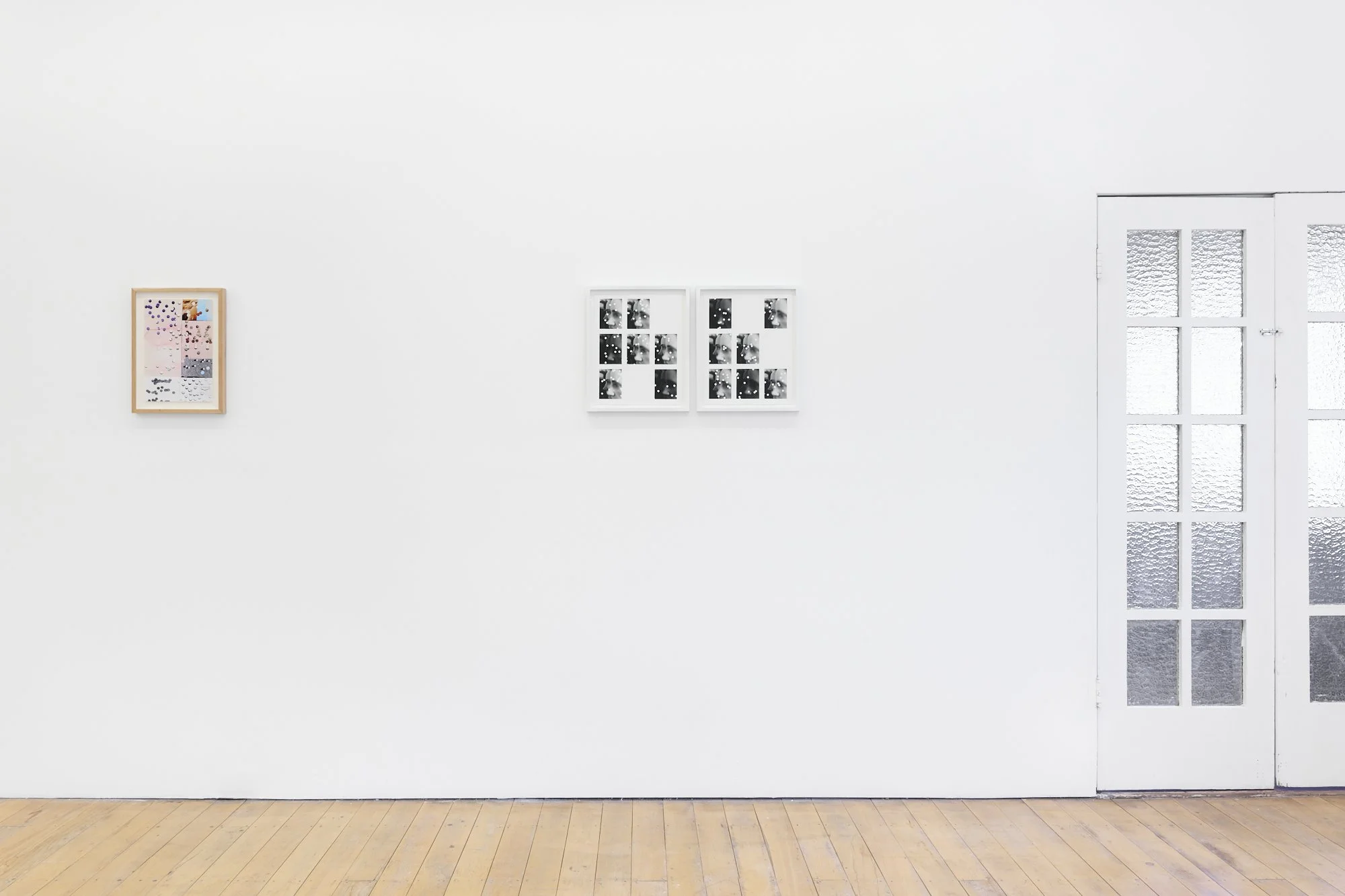
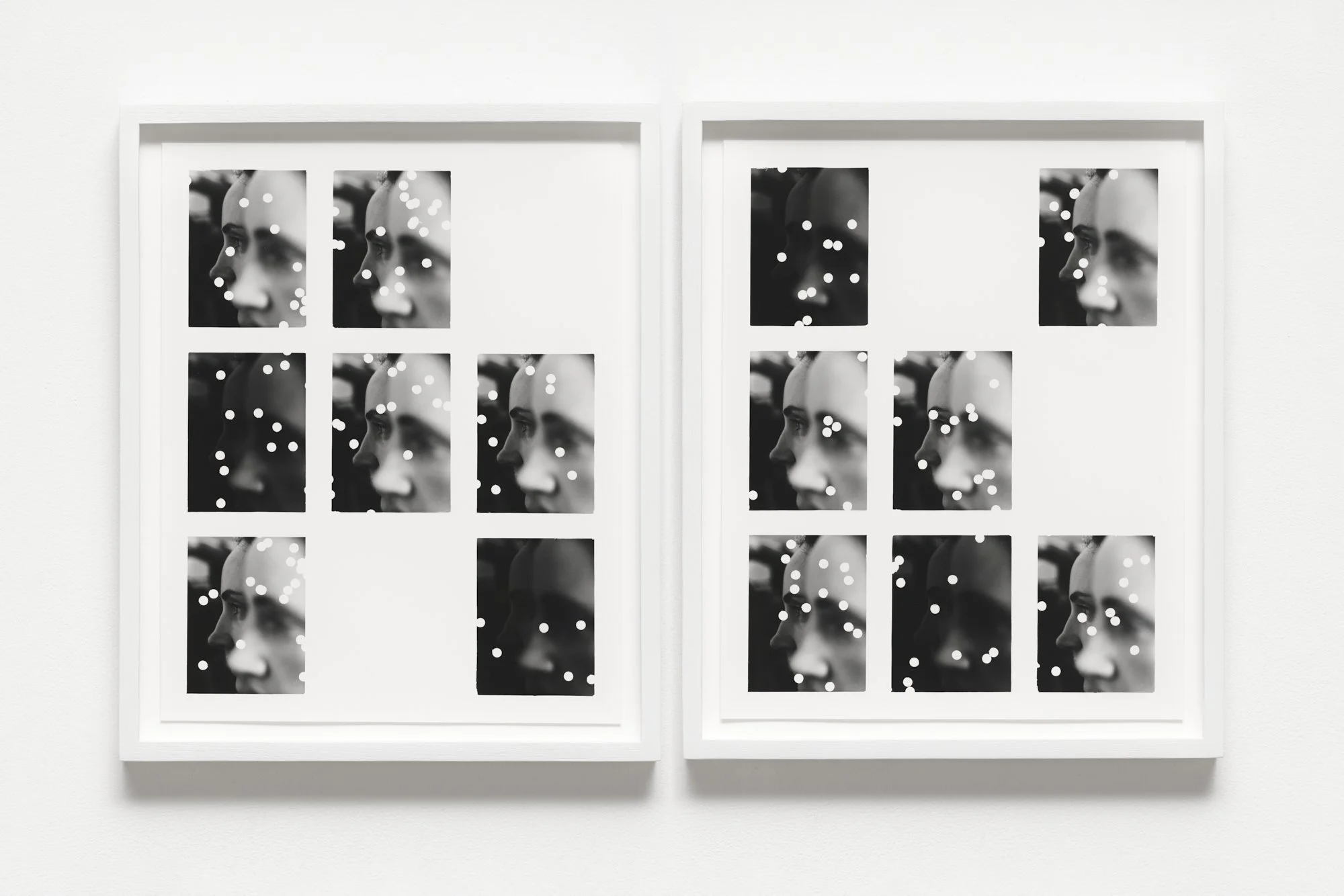
Diplopia (1+2), 2025, Silver gelatin print on fibre matte paper (multiple exposures), hand-finished white lacquered oak frame, raised float mount, ArtGlass AR70, 33.2 × 40.8 cm, as part of solo presentation ‘Continuous Present’ at LAILA Sydney.
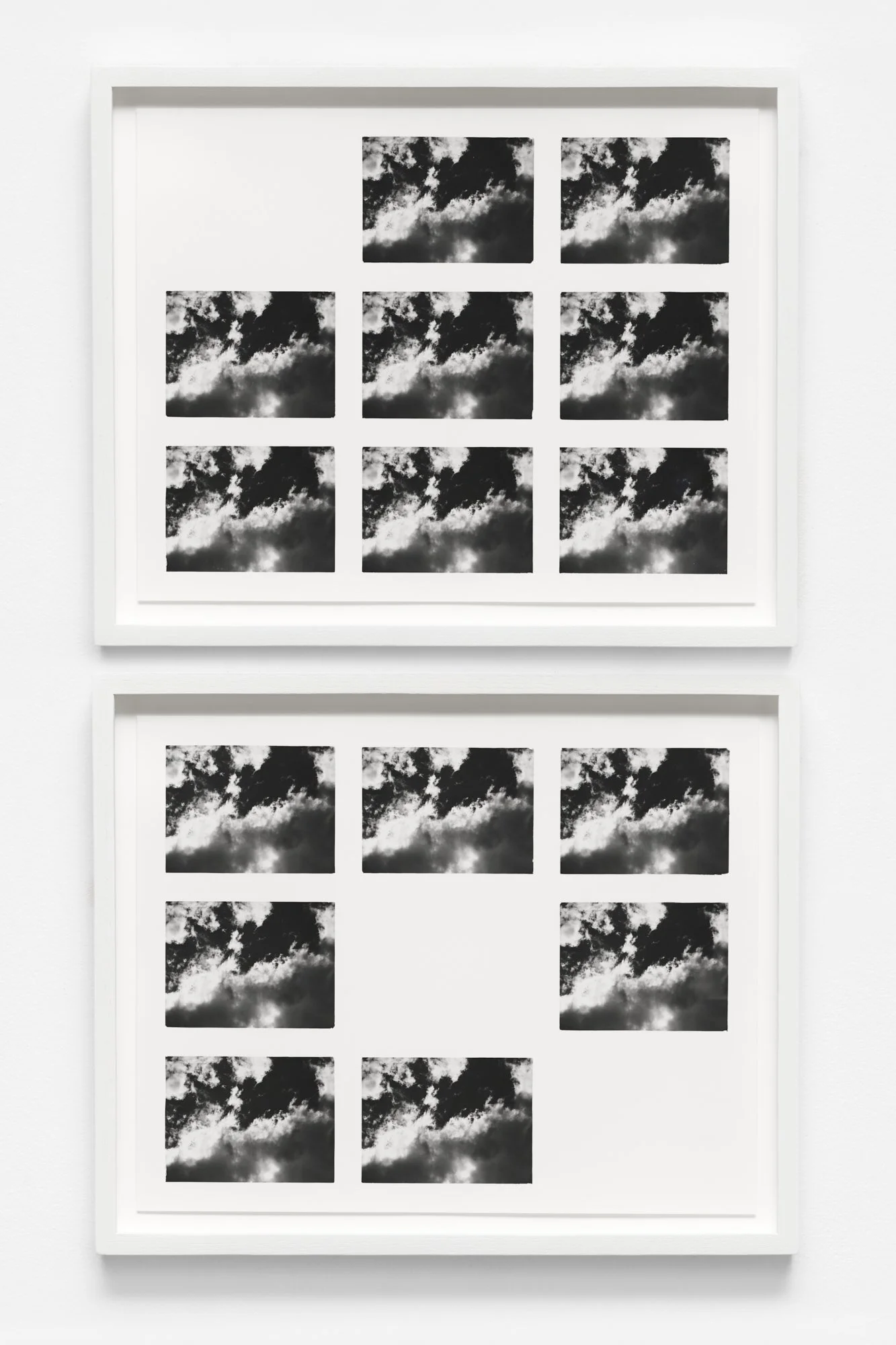
Blind spots in the linear trajectory, 2025, silver gelatin print on fibre matte paper (multiple exposures), hand-finished white lacquered oak frame, raised float mount, ArtGlass AR70 33.2 x 40.8 cm, as part of solo presentation ‘Continuous Present’ at LAILA Sydney.
Same same but different – catalogue essay for ‘Continuous Present’ by Lucy Swan
Repetition is often understood to be something negative; sameness; the result of a lack of imagination; stagnation; of being boring; inhibited; uptight; controlled; mindless. Which of course, it can be, if we’re thinking about being repetitive. But repetition done with awareness, with presence, with intention, becomes something else. It transcends the mundane and mindless and becomes a discipline; a tool; ritual; devotion; a practise.
In The Second Sex Simone de Beauvoir identifies two types of work; immanence and transcendence. The former being the chores; domestic labour; a woman’s work that is never done. The latter, transcendence, the work of men that allows for growth, development, progression, self-determination. Of course this has nothing really to do with sex, but everything to do with self-determination. Although there is something innately, inescapably feminine about repetition. It operates beyond the forward momentum of masculinity; of dominance; of progress; progression. It’s cyclical, but never exactly the same. Feminine bodies with wombs operate on cycles, inescapable cycles that repeat roughly every month. The moon orbits the earth on its lunar cycle roughly every month. The Earth orbits the sun, and repeats, repeats, repeats. Always different, always the same. Repetition is built into our world in the same way it’s built into our bodies; a foundational force; in cycles; patterns; always changing; always becoming; different.
In Difference and Repetition Gilles Deleuze explores repetition within the parameters of originality, even liberation. Castrating it from previous definitions that flattened it within the realms of reproduction or replication. Instead of seeing repetition as something we’re doomed to fall into, he framed repetition as a process, a way of meaningfully applying ourselves not just in the present but in the future. In other words, a process of self-determination, that places us in the future; filling it so as not to fear it. And in other words, again, this time Brian Enos; repetition is a type of change. When I think of repetition I think of concrete poetry, anaphora, conversation, krautrock, of beach combing, Bach, relationships, yoga, meditation, domesticity, desire, fucking, devotion, discovery, commitment, discipline, confidence… things and people, I love. I see repetition as a practise of devotion; both an anchor and a pursuit, a paradox.
The continuous present is a concept or approach or methodology by Gertrude Stein which she described as ‘everything being the same everything being different’. You only need to read a small sample of her work to understand this as a literal description of her process. Stein subverted the rigidity of formal grammatical constructions to stretch and play with meaning. She ridiculed these systems of sanitised language and luxuriated on single words, on phrases, on sentences, repeating them, adding to them, subtracting from them. She rendered existing frameworks meaningless and still made sense through a rhythmic sensuality. In a way, Stein suspends time within her words or at least queers it. Deviating from its linear form of relentless progression. It forces the reader to linger rather than move on, to allow meaning to become, rather than explaining it. It feels connected to the work of Hélène Cixous, who in her 1976 essay The Laugh of the Medusa introduced her concept of l’ecriture feminine or women’s writing. Which by necessity, existed beyond the boundaries of grammatical laws and masculine constructs of control that constrained women into flattened stereotypes. Both these concepts use repetition as a tool of practise to create difference, to build or develop or become slowly, from within themselves in an almost continuous flow.
Yoga practitioners step onto their mat in full appreciation and acceptance that their body, their breath, their practise will not be the same each day despite repeating the same sequence of postures and are encouraged to pay attention to these differences without judgement. To listen to their bodies; their thoughts; their feelings throughout the moving meditation and take that awareness out with them into the world and their daily lives. This process of repetition, of awareness, creates an interior stillness. A familiarity and sense of security that awakens the mind body continuum. It gives the practitioner something that is their own. A commitment to actively engaging with this familiar and ever-changing practise. Of course, some step on the mat and find it unbearingly boring ‘it’s always the same’, but then, those practitioners are missing the point. The present can be overwhelming, the future terrifying, the past distracting. When writing about people Stein found the act of remembering to be cataclysmic to her writing process. Taking her out of the present. The past blocking her flow and the automatic state she liked to work from. It’s Stein’s understanding and appreciation of our need to be present in the moment continuously so as not to get knocked off course that resulted in this process. We can only create in the present, so Stein elongates each moment, each word, each work into something continuous in order to live through her practise, her self-determination, into the future. Focusing on the immediate work, the immanence, in order to transcend. It’s a prioritisation of process over product. Of the journey rather than the destination.
The word ‘Practising’ is used by Antonia Pont in A Philsophy of Practising as a means of naming a distinct way we approach what we do but not everything we do. She discusses the way in which practising can be multimodal, that the way we approach our primary practice, can be applied to anything. For example, a sculptor can approach cooking with the same care and engagedness as they do their art. Therefore, a practise is more about process than progress, pleasure as opposed to work. Verb not noun. Practise as opposed to practice. The content of which is interchangeable as long as it is approached in the same way; lovingly; exploringly; devotedly. Through this way of practising we create a place where our interior and exterior worlds converge, merge. A place of familiarity and newness. In an interview with Art21 the artist Sophie Calle talks about the boring things being necessary for her. The boring things being immanent work like washing the floor. She describes it as mindless, a place where she gets to think, where ideas come to her, in other words part of her process. The immanence facilitating the transcendence.
The rejection of repetition feels like a false privilege available only to someone entirely unattached to anyone; anything; any responsibility; any care. Something for the roamers; the wanderers; the avoidants. While embracing repetition feels almost radical in its commitment to process; to deepening understanding. It is radical in its rejection of societal pressures to keep moving forward, to focus on the future, to change rather than become. The way I see it, is that the immanent work has to be done in order for the transcendent work to be possible, there is no short cut. Or there is. But if you take it you won’t necessarily have the stamina or self-awareness/determination to sustain the transcendence without having passed through the immanence; the repetition; the discipline. It’s about being present, fully present, to avoid the repetitiveness in repetition. Through embracing repetition within our practises we’re committing to sustaining a consistency free from outward pressures. Strengthening the bond between our inside and outside selves, creating our own portals of intentionality that extend our present, the moment, into an eternity.
Reading list
A Philosophy of Practising with Deleuze’s ‘Difference and Repetition’ by Antonia Pont
Difference and Repetition by Gilles Deleuze
Picasso by Gertrude Stein
Tender Buttons by Gertrude Stein
The Laugh of Medusa by Hélène Cixous
The Second Sex by Simone de Beauvoir


Installation view, Loom’ 2025, American Oak, art glass, 19th century egg tray and human hair, as part of Spring 1883 Art Fair, presented by LAILA, Hotel Windsor, Naarm/Melbourne.


Installation view, Loom’ 2025, Christina May Carey, American Oak, art glass, 19th century egg tray and human hair; and Pollux, 2025, a work in collaboration with Aaron Christopher Rees, aluminium casting and human hair, as part of Spring 1883 Art Fair, presented by LAILA, Hotel Windsor, Naarm/Melbourne.

Installation view, Pollux, 2025, Christina May Carey and Aaron Christopher Rees, aluminium casting and human hair, as part of Spring 1883 Art Fair, presented by LAILA, Hotel Windsor, Naarm/Melbourne.


Installation view, ‘Gemini,’ a collaborative exhibition by Christina May Carey and Aaron Christopher Rees, Fiona and Sidney Myer Gallery, Naarm/Melbourne, 2025. Vertigo, 2025, Christina May Carey and Aaron Christopher Rees, silver gelatine print on fibre paper, xanthophylls extract ‘yolk’ dye, framed with art glass; 24/7, 2025, Christina May Carey and Aaron Christopher Rees, four channel video, aluminium, LCD screens, iPhones, power cords; Castor and Pollux, 2025, Christina May Carey and Aaron Christopher Rees, aluminium casting and human hair; Time is Away, 2025, Christina May Carey and Aaron Christopher Rees, silver gelatine print on fibre paper, xanthophylls extract ‘yolk’ dye, framed with art glass Punch Card (Kitchen Sink), 2025, Christina May Carey and Aaron Christopher Rees, silver gelatine print on fibre paper, framed with art glass; Gemini, 2025, Christina May Carey and Aaron Christoper Rees, dual channel video, stereo sound. 8:45 min. Curated by David Sequeira and Joon Youn. Documentation Aaron Rees.


Castor and Pollux, 2025, Christina May Carey and Aaron Christopher Rees, aluminium casting and human hair, as part of ‘Gemini,’ a collaborative exhibition by Christina May Carey and Aaron Christopher Rees, Fiona and Sidney Myer Gallery, Naarm/Melbourne.


Hysteria! 2025, Christina May Carey and Aaron Christopher Rees, ceramic stoneware, glaze, human hair, as part of ‘Gemini,’ a collaborative exhibition by Christina May Carey and Aaron Christopher Rees, Fiona and Sidney Myer Gallery, Naarm/Melbourne.


24/7, 2025, (detail) Christina May Carey and Aaron Christopher Rees, four channel video, aluminium, LCD screens, iPhones, power cords; as part of ‘Gemini,’ a collaborative exhibition by Christina May Carey and Aaron Christopher Rees, Fiona and Sidney Myer Gallery, Naarm/Melbourne.

Installation view, 24/7, Christina May Carey and Aaron Christopher Rees, four channel video, aluminium, LCD screens, iPhones, power cords; Sunny Side Up, silver gelatine print on fibre paper, xanthophylls extract ‘yolk’ dye, framed with art glass; Punch Card (Kitchen Sink) silver gelatine print on fibre paper, framed with art glass; as part of ‘Gemini,’ a collaborative exhibition by Christina May Carey and Aaron Christopher Rees, Fiona and Sidney Myer Gallery, Naarm/Melbourne.
‘Gemini’ – catalogue Essay by Tessa Bell
“What counts as the social now has sound effects, like a metronome’s tick. Talking about it is like talking about ghosts or auras or power.”1 This is a line from Lauren Berlant and Kathleen Stewart’s collaborative writing experiments. Ghosts, auras, power – celestial guidance, rhythms of ritual and replication (control) and the spectre of a threatening undoing. How do you talk about what counts as the social now? How do you describe the forces at work?
Gemini throws up easy reference to straightforward dualities that hold up - the world turns and splits, keeps spinning, splitting into halves. Precarious conditions compound, time washes across the surface. Showing in the two rooms of this gallery, Gemini is a new body of work by Christina May Carey and Aaron Christopher Rees that the artists have made together, a twinned emergence locked on to calculated mechanisms and physiological instinct as they’re played through in the scenes that form around us.
Laid out across the Fiona and Sidney Myer Gallery are photographs, sculptural assemblages, and moving image and sound works that engage with the apparatuses we wield to try to stake a claim in the unrelenting pull of time, and the ways we – a reiterative we – become sensible to the cyclic structures of it, our attention slowing while we watch the wheel turn. These dual lines of enquiry are interwoven with a slowed attention to moths, across two distinct settings in dynamic relationship. One, the intimate space of domesticity – and the other, the vast ecological landscape that Bogong moths navigate in seasonal patterns. First heading north to the mountains to escape the heat, the moths return to south-eastern Australia to reproduce and die – the Milky Way (the cosmos) a stellar compass for their two migrations.2
The natural world, the junctures of a notionally natural order under pressure, and the sort of falsehood of the givenness of a situation, is not totally new territory for Carey and Rees. Both artists have previously made work concerned with biological response to prevailing circumstances, the way symptoms haunt the surface and the scaffolding structures we take up to see ourselves or see ourselves being seen. They follow the rivulets that run off course when the dominant body overflows, stay with the strain in the network and adjust their gaze to look closely at the hyper-object.
Rees makes felt the tension of photography as process, a chemical exchange that acts on and with operative mechanisms – marking the presence of a volatility within the constraints of production. Following Franco Berardi, Rees is interested in how ordinary event (our sense of time in space) is shaped by the prevailing logic of that space, and how our perception suffers a kind of dislocation at the hands of pervasive technological adjustments to the existent world. Carey’s restrained sound, moving image and sculptural assemblages sometimes bring together components from earlier works into new, single installations. Their capacity for dialogue as they’re held in new arrangement reflects what they tell us about our refracted experience at the helm of quasi-objects like phones. Slick screens get under our skin, cognitive extensions that collide with the insistent material fact of our bodies, undermining our composition whilst mediating the fabrication of outward composure. Both Carey and Rees are unraveling something akin to what Jonathan Crary articulates as, “the modeling of one’s personal and social identity…reorganized to conform to the uninterrupted operation of markets, information networks, and other systems.”3 Crary’s 24-7 time – “the expanding, non-stop life-world of twenty-first-century capitalism” is framed through “paradoxes that are inseparable from shifting configurations of sleep and waking, illumination and darkness, justice and terror, and from forms of exposure, unprotectedness, and vulnerability.”4
These are the threads running through Gemini, and that the artists share their domestic life is significant enough to mention – a doubled capacity for feeling and figuring out the complexities of intimate home spaces that are threatened with the encroaching antagonisms of a 24-7 world. None of the work in Gemini is without charge, it has the liveness of whatever happens when you try to make the present, and here, Carey and Rees have recorded encounters with late liberalism. Without making claims to feel the world from the viewpoint of a universal subject, the Gemini twin of their personal histories reverb through broader landscapes where the malignant force of an illuminated world is wreaking spiraling havoc – the insidious degradation of sleep entangled with “environmental catastrophe in its declaration of permanent expenditure, of endless wastefulness for its sustenance, in its terminal disruption of the cycles and seasons on which ecological integrity depends.”5
The front room holds work that translates an internal world experience. In the back room – the loops of the external world click along an arc. On one wall, a projection of the cyclic, distant time of the moon plays out, shadows sift over the pebbled surface – its stages marking us, marking the life-world, marking an elsewhere. A projection on a second wall shows gears and cogs moving with a large brass counter balancing mechanism that locks a telescope onto the earth’s rotation – an intricate, dynamic relationship between velocity and weight that pulls to another centre. We try to stabilise ourselves in the flux – to see something of what has happened, of what could happen. In the second half of this sequence, the moths spiral away from migration paths, trapped outside their trajectory, the dense lights of 24-7 time overpower their celestial navigation system – a phototactic mechanism. This is a very real effect, and metaphor for the ways our dogged drive for illumination obfuscates our vision – the light is too bright to see the hubris that (specific modes of) human existence brings to bear on the intricate systems that cultivate us – the vice grip we refuse to soften under the guise of safety, surveillance and progress. A soundtrack of a commercial washing machine at a laundromat is slowed enough to be imperceptible, slipping from recognition – but the mandate to fuel capitalist accumulation through the labors of reproduction spins on.
For Carey, during a period of sleep deprivation, the discovery of clothes moths at home and at work elicited a visceral reaction – a distressed recoil. The moths – a flighty, shifty presence – had crept over the threshold, threatening to disrupt and take hold of carefully held routines of tending, carried out in resistance to a disorienting monotony and sleeplessness. The egg trays cast in aluminum and ceramic are arranged here like a game or a loom, a structure to attach to life, in defiance of maddening tedium or an infiltrating force – an apparatus for repetitious action that diverts attention away from the uncontainable. Carey envisaged a female figure weaving her own long hair through the game/loom – a resourceful gesture – seeking some sense of control in a compromised living room. Smooth sanity in the face of staying the course, is not self-evident. For Rees, the egg tray marks calendar time, the immediacy of another day laboring in the same conditions, and the mundane but critical routines that sustain us through this churn – an egg for breakfast, a daily dose – making sure we’re fed to feed the system. In the room with the tray and the dilated pupils blinking on the bed, are a series of photographs dyed in the feed (calendula flower) that chickens eat. They are tinted yellow like yolks, like genesis, reproduction, the trap of flattened difference in the service of maximized productivity and the cosmos itself (containing all). Then the double yolker brings us right to the age of the splitting Gemini – an age of restless multitude – that “has the semblance of a social world, but it is actually a non-social model of machinic performance and a suspension of living that does not disclose the human cost required to sustain its effectiveness.”6
What Carey and Rees are prodding at is not needlessly bleak but deals directly with the circumstances. The pieces in Gemini work like whatever the inverse of sharp, lit relief is – a reprieve in the dark to reckon with an assembled truth about the industrialization of experience, fractured but no less embodied, and the way quotidian freedom is denied through its promise and pursuit. A Berlant/Stewart line rings out, “even if you’re not free all the way through you can build from the space where you’re not entirely crushed.”7 For me, the works make diffuse and recognizable, the tight nexus of wakeful sociality that plagues us into slumber. The works in Gemini are like twinned forces pressing on myth and matter from two planes, two modes of time, that pry open a closed loop. It’s not a snapping at the world, a quick pass at the subjectivities we slip between while we navigate choppy, corroded terrain – disoriented and tired – but a noticing of the pause that waits for us, a chance to find some passing equilibrium in the chaos of repetition and possibility.
1 Lauren Berlant and Kathleen Stewart, The Hundreds (Duke University Press, 2019), 120.
2 David Dreyer et al. “Bogong moths use a stellar compass for long-distance navigation at night,” Nature (June 2025): https://doi.org/10.1038/s41586-025-09135-3.
3 Jonathan Crary, 24:7: Late Capitalism and the Ends of Sleep (Verso, 2013), 9.
4 Crary, 24:7, 8.
5 Crary, 24:7, 10.
6 Crary, 24:7, 9.
7 Berlant and Stewart, The Hundreds, 43.
References
Berlant, Lauren and Kathleen Stewart. The Hundreds. Duke University Press, 2019.
Crary, Jonathan. 24:7 Late Capitalism and the Ends of Sleep. Verso, 2019.
Dreyer, David, Andrea Adden, Hui Chen et al. “Bogong moths use a stellar compass for long-distance navigation at night.” Nature (June 2025): doi.org/10.1038/s41586-025-09135-3.


Installation view Hypnagogia, 2024, as part of ‘Hair Pieces,’ Heide Museum of Modern Art. Hypnagogia, 2024, HD video, desktop monitor, laptop, steel structure, extension leads, stereo sound and speakers, carpet; Rattails, 2024 HD video, various iPhones and iPad, extension leads; Red-Eye, 2024, C-type print on Fuji Lustre, oak frame. Curated by Melissa Keys. Documentation Aaron Rees.
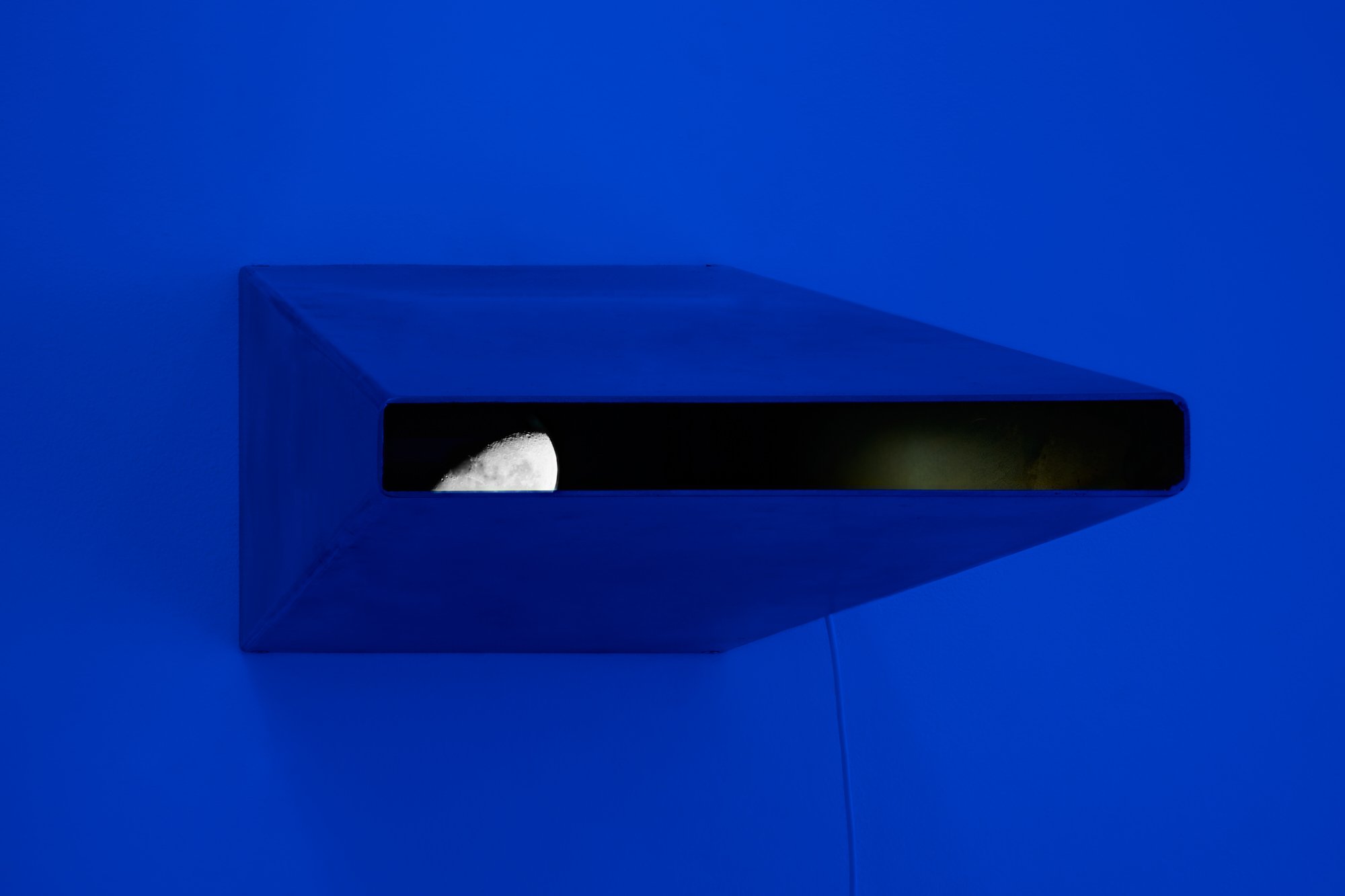
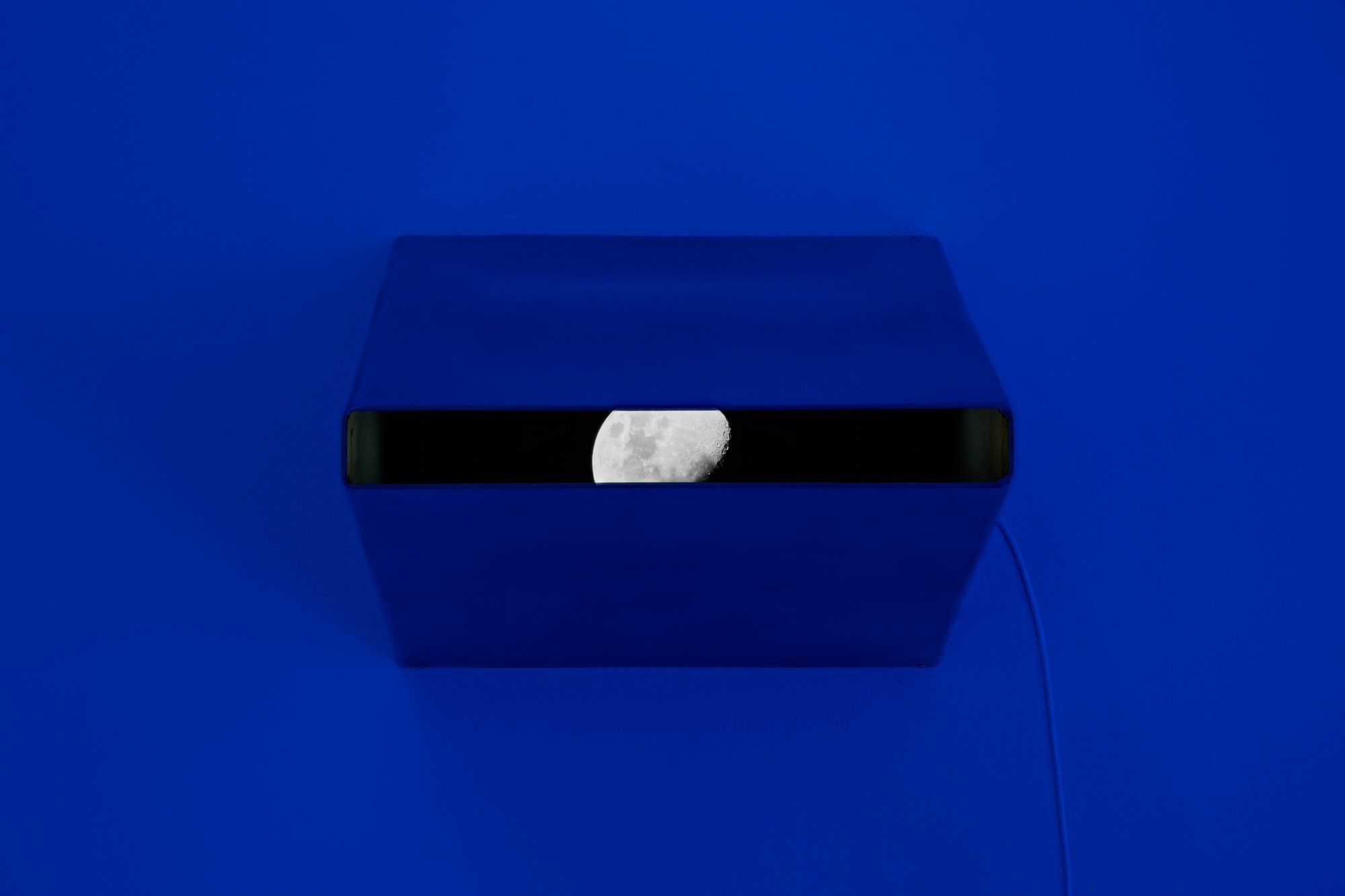
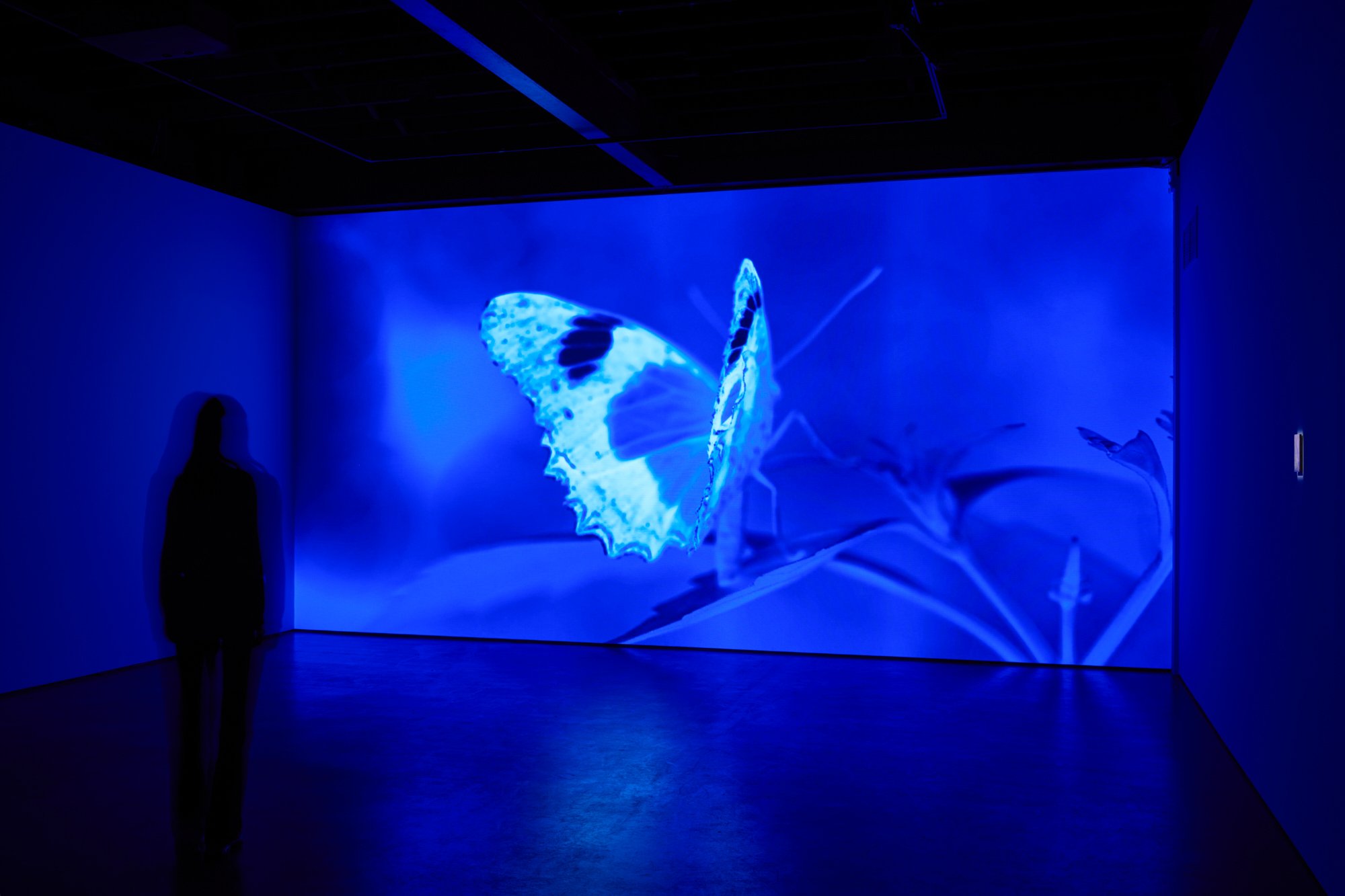
Moon II, 2023, HD video, iPad and steel viewfinder, as part of group exhibition ‘This Might Just Pass the Time,’, Blindside Gallery, Naarm/Melbourne. Slide 3, installation view, alongside work by Aaron Christopher Rees. Curated by Annabel Brown. Documentation Aaron Rees.

Embodied Tendencies, 2023, HD video and stereo sound, as part of group exhibition ‘Making the Invisible Visible,’ Fiona and Sidney Myer Gallery, Naarm/Melbourne. Curated by David Sequeira and Joon Youn. Documentation Aaron Rees.
Embodied Tendencies (excerpt), 2023, HD video and stereo sound, as part of group exhibition ‘Making the Invisible Visible,’ Fiona and Sidney Myer Gallery, Naarm/Melbourne. Curated by David Sequeira and Joon Youn. Documentation Aaron Rees.
Embodied Tendencies – catalogue essay By Tessa Bell
We open and close our eyes, and tremors skit forth, slip through. They skim along the high wires we tread as we hold it down or hold it up. We try to keep a steady beat, as we fall in, fall out. Get our sea legs. Christina May Carey’s Embodied Tendencies is a glimpse of the curdling, of the strangeness that, as Lauren Berlant and Kathleen Stewart write, raises some dust.1
Working across photography, video and installation, Carey has often investigated a kind of friction, the conditions of the liminal space between heady perception and the material facts of our being. What happens there? What is the shape of it? – is the subject of her assembled productions. They are outputs that stay with the flickers of dislocation that pass through the heart. In other works, she has explored a being compelled by, ruminating on the moonlight as a self-mythologizing (self-sufficient) phenomena that is no small comfort in the cavernous natural world. She has prodded at the banal, curious about repetition and the habitual, as it gets caught in the cross-wires, an attention to knotting that induces an otherwise occluded state of consciousness. Carey is interested in the ways uncooperative mechanisms break and glint on the surface, in the symptom as a making felt of the tension between a robustness and fragility that we can’t really rationalise.
Here too, that physiological pressure is held taut and interrogated. Butterflies clap their wings, researchers in Sweden have relatively recently recorded the contortion of their wings into cups for staccato departure from predators. They don’t really glide, it’s higher order technical prowess – slick, they sip. Carey’s works are rigorous and resound like a performance of fragmented encounter with the torrent of infinite variability. This project contends with the possibility that the live impact of these experiences only runs along a few tract/ks. Our bodies falter, our breath catches, as we grapple with the fallibility of our recall and our minds trace our embodied tendencies to approach or retreat. We can’t know for sure until after the event, actuality emerges veiled in a film, coalescing on the other side of something precise. Even if we have fidelity to the moment, it eludes us in the aftermath, until it – or an approximate – happens again.
Carey describes the making of her moving image works as a method of instinct, a recomposition of something like sediment pulled from our earthly lives into another – in a fairly quotidian, lower-key sense – realm of time. But I think of it as a measure of honed intuition, an expression of a deft reading of the thoughts that escape translation. What is being wrested from the grasp of the ongoing is never an inflated sentiment, but it is felt all the same, a brash take of the atmosphere. The imagery in this work is uncomfortable, heightened by an edge condition marked by the grid, defined parameters for exposure to symbols we can register. There are the rats, the rolled shadow of their tails, slipping. We see the play in simple geometries and understand the notion. Rats scratching past one another, the race, the game of sociality as an auxiliary device to pry open an invisible circuit. We’re here together. We need not tread with monastic reverence towards the big blue screen, because it’s washing over us already. We feel our thoughts, our deviations from presence, snagged on the contours of a prior unfurling.
Franco “Bifo” Berardi, writing about the hyper-semiotization and de-sexualisation of desire, pulls up Félix Guattari’s ‘retournelles’ (refrains), “a vibration whose intensity can be linked with this or that system of signs and nervous stimulations.”2 “Desire,” Berardi continues, “is the perception of a refrain that we produce to capture the lines of stimulation coming from the other (a body, a word, an image, a situation) to then relate to these lines.”3 Carey’s work sits within this idea of a (discordant) refrain, and so desire – awry and uneasy – is in the mix here. Something sounds, and something billows across the topography of this projection. As a system for sequencing, the grid insists on some sense of control over the frenetic streams of imagery that scaffold our psychological lives. It brings rules to the fraught and visceral nature of the images that come to mind, dormant and then active – a leviathan network of perceptions – some of them dulled or diluted, some rush and ring in our ears. In this dexterous gesture, the charge around the innocuous becomes visible and just as it acts on the imagery, it imposes a condition on the viewer, the organising structure zip locks us into emphatic response to the fray, if we stay in it. But we are always in it, it is just becoming palpable.
1 Lauren Berlant and Kathleen Stewart, The Hundreds, (Durham: Duke University Press, 2019), 5.
2 Franco “Bifo” Berardi, “Hyper-Semiotization and De-Sexualisation of Desire: On Félix Guattari,” e-flux, no. 133 (Feb 2023). https://www.e-flux.com/journal/133/514287/hyper-semiotization-and-de-sexualization-of-desire-on-flix-guattari/.
3 Berardi, “Hyper-Semiotization and De-Sexualisation of Desire: On Félix Guattari”.
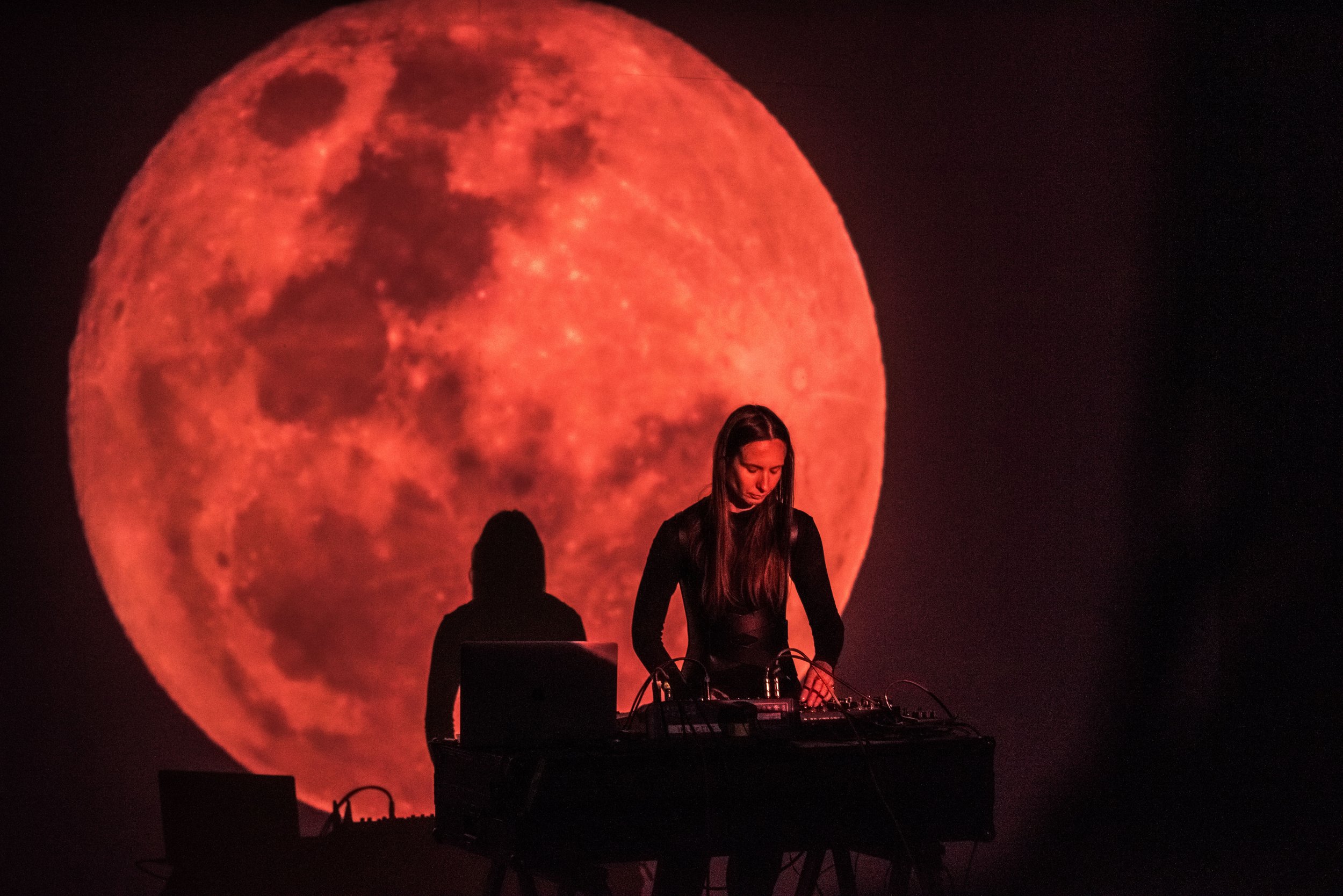
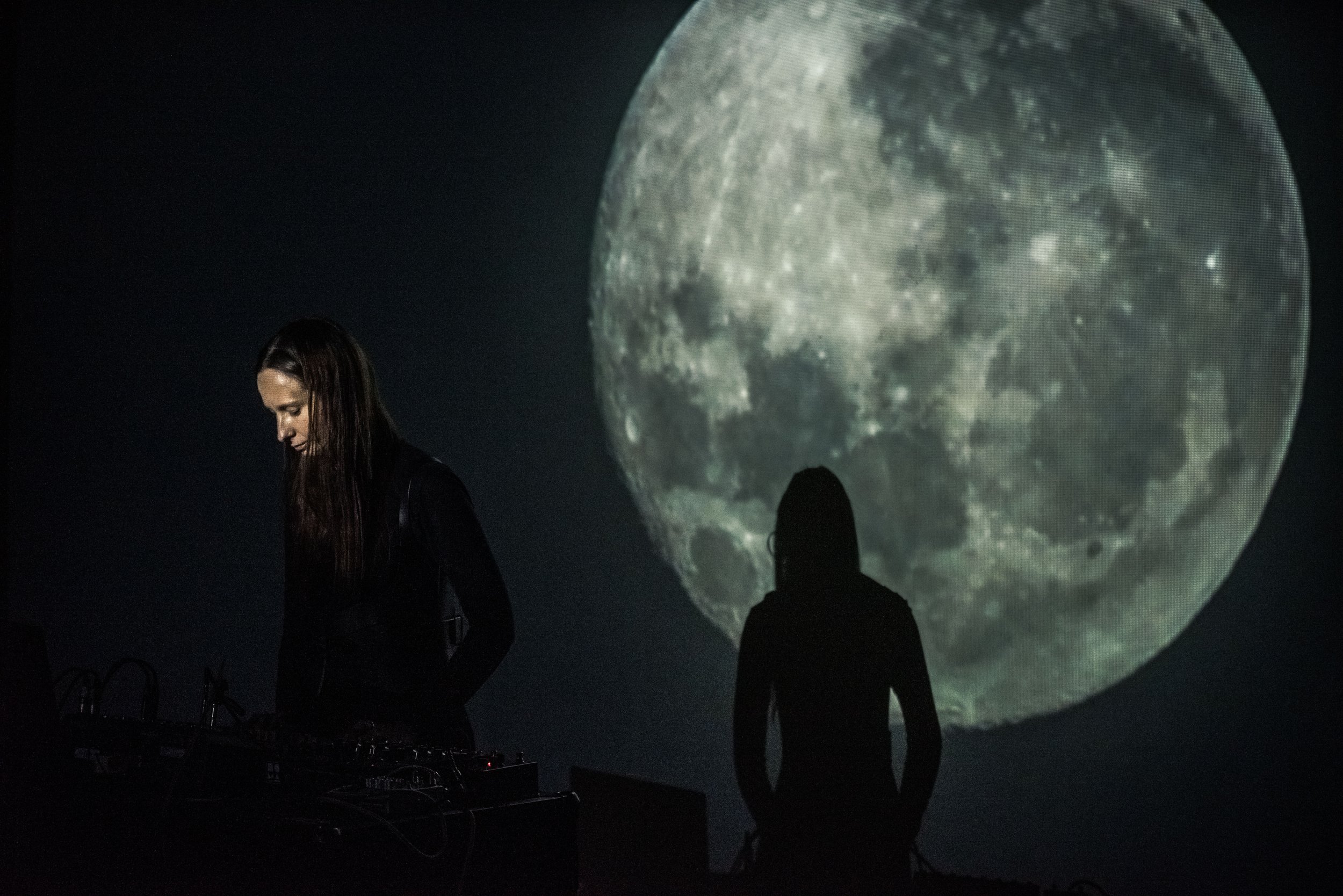
Imprinted Time of Waiting, 2023, HD video projection for live sound performance by Ekaterina Bazhenova-Yamasaki, as part of group exhibition ‘Imprinted Time of Waiting,’ Iklectik Art Lab, London, 2023. Curated by Ekaterina Bazhenova-Yamasaki. Documentation Matt Favero.
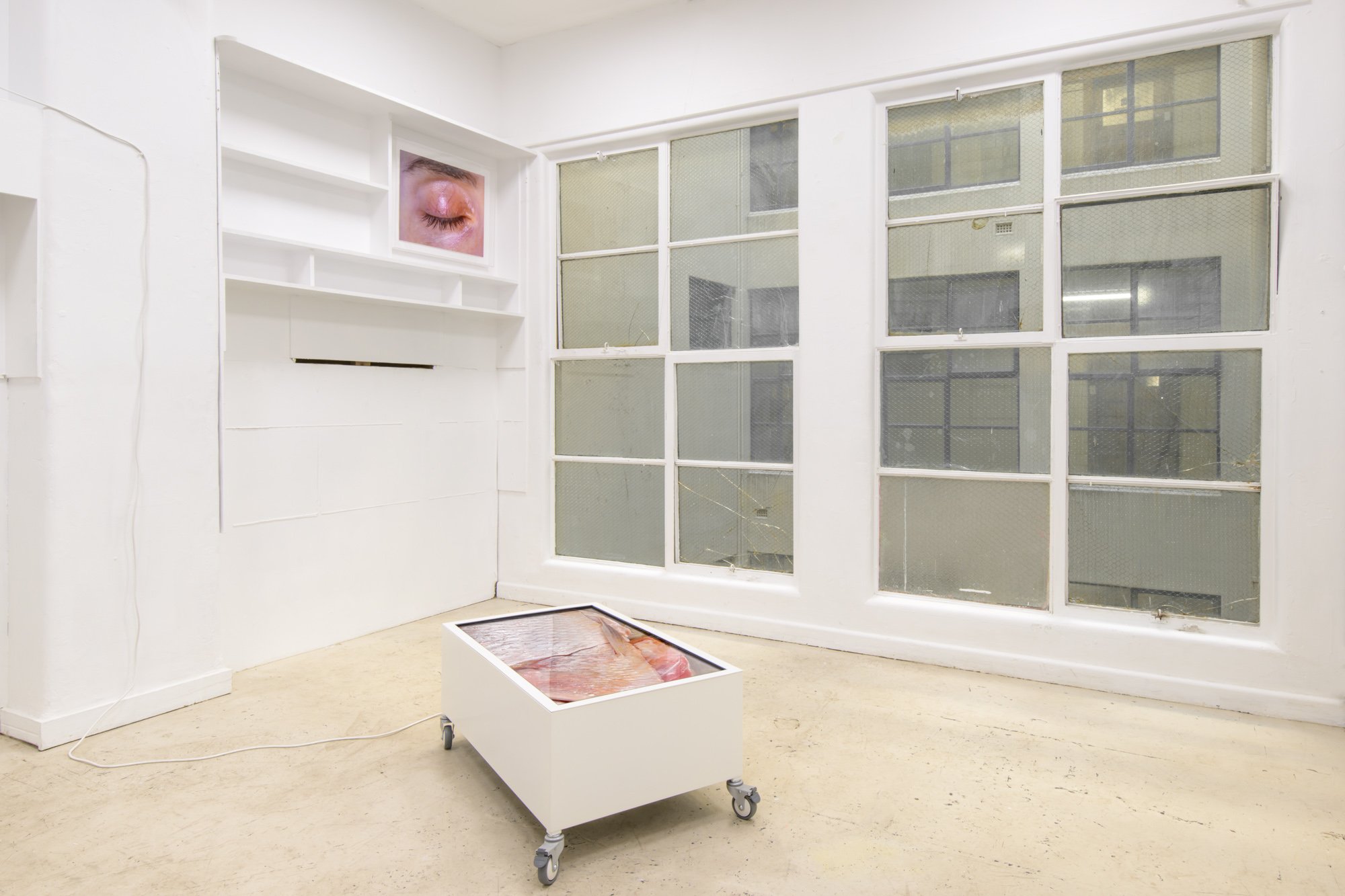
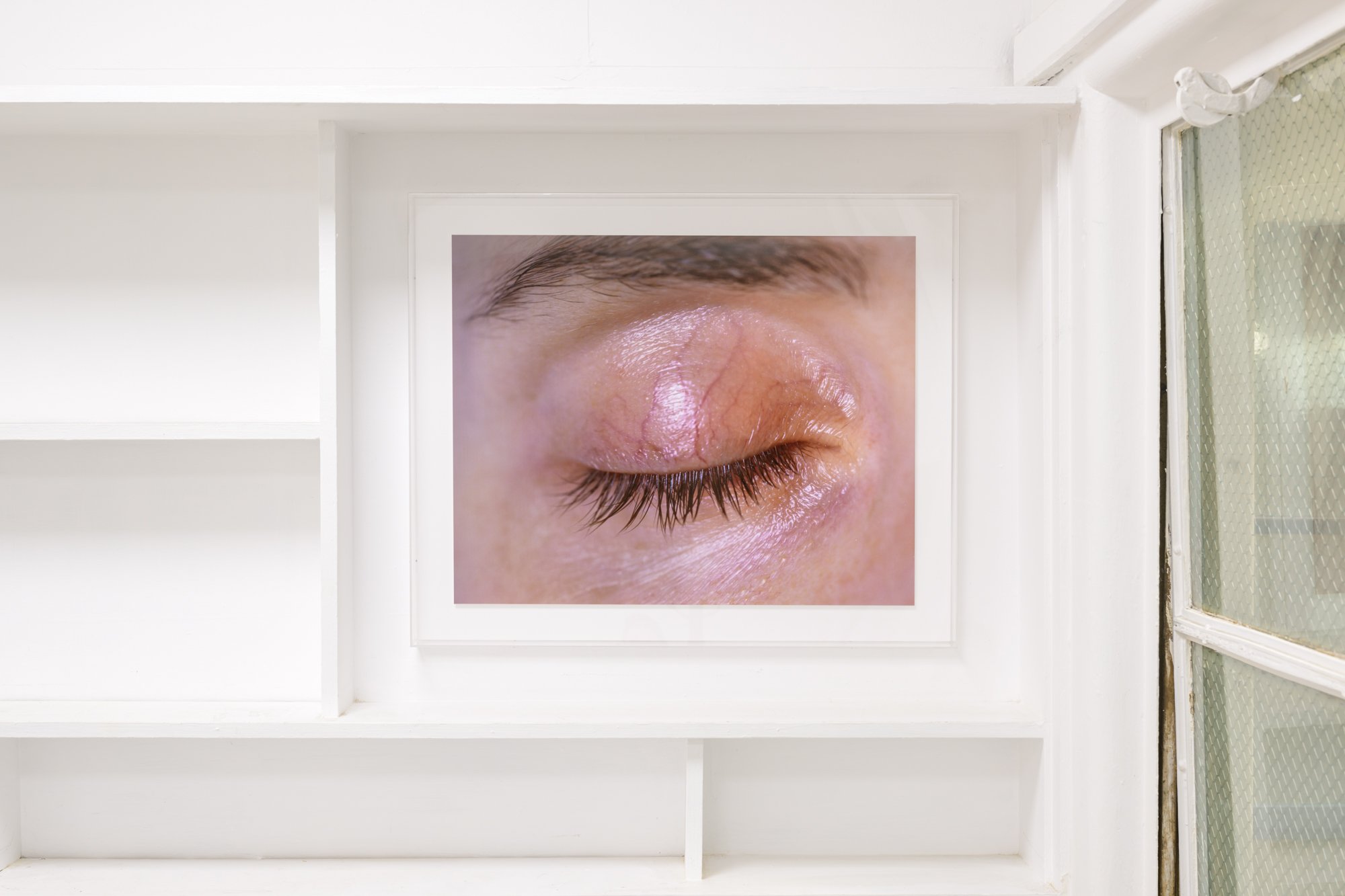
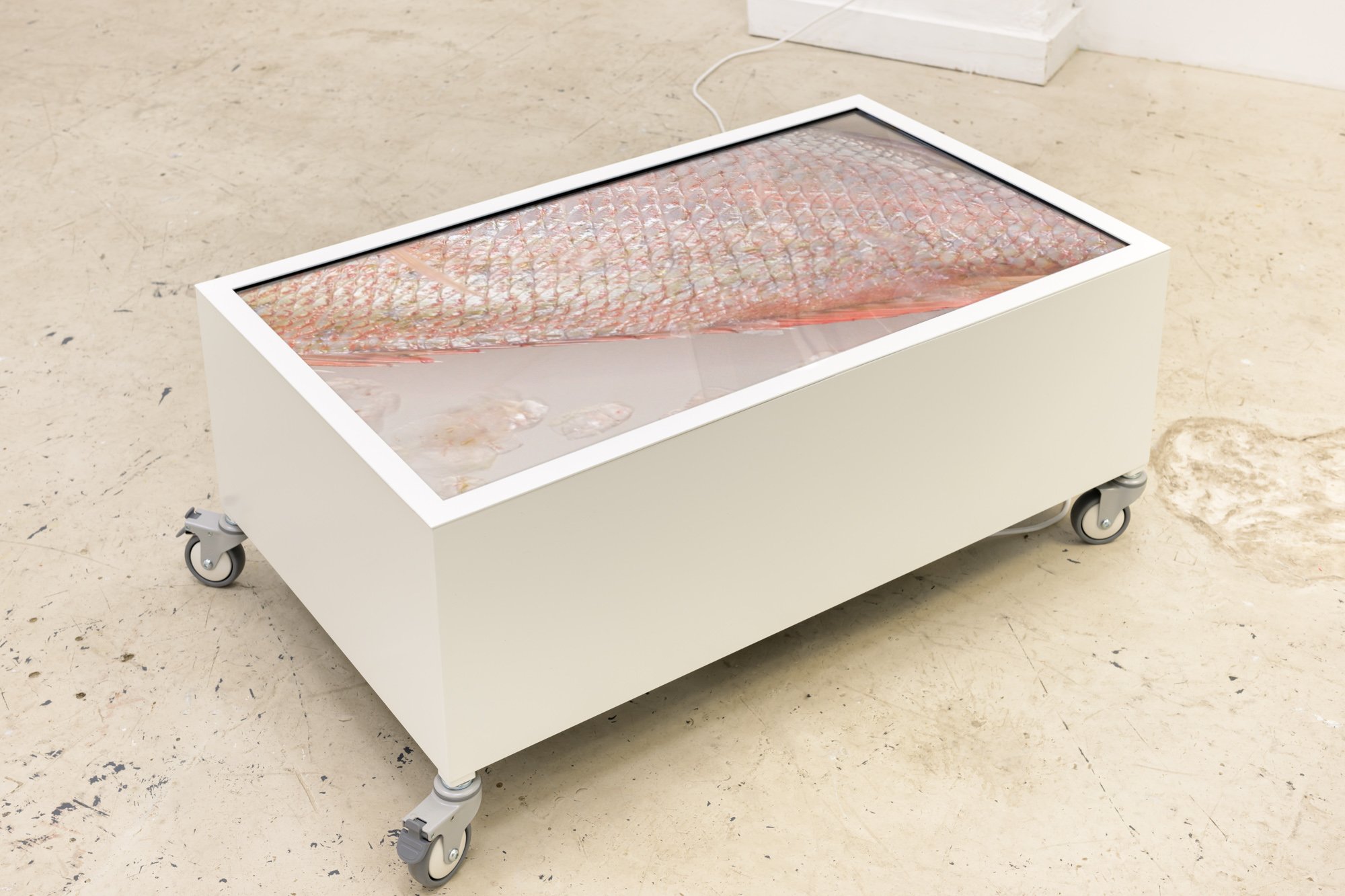
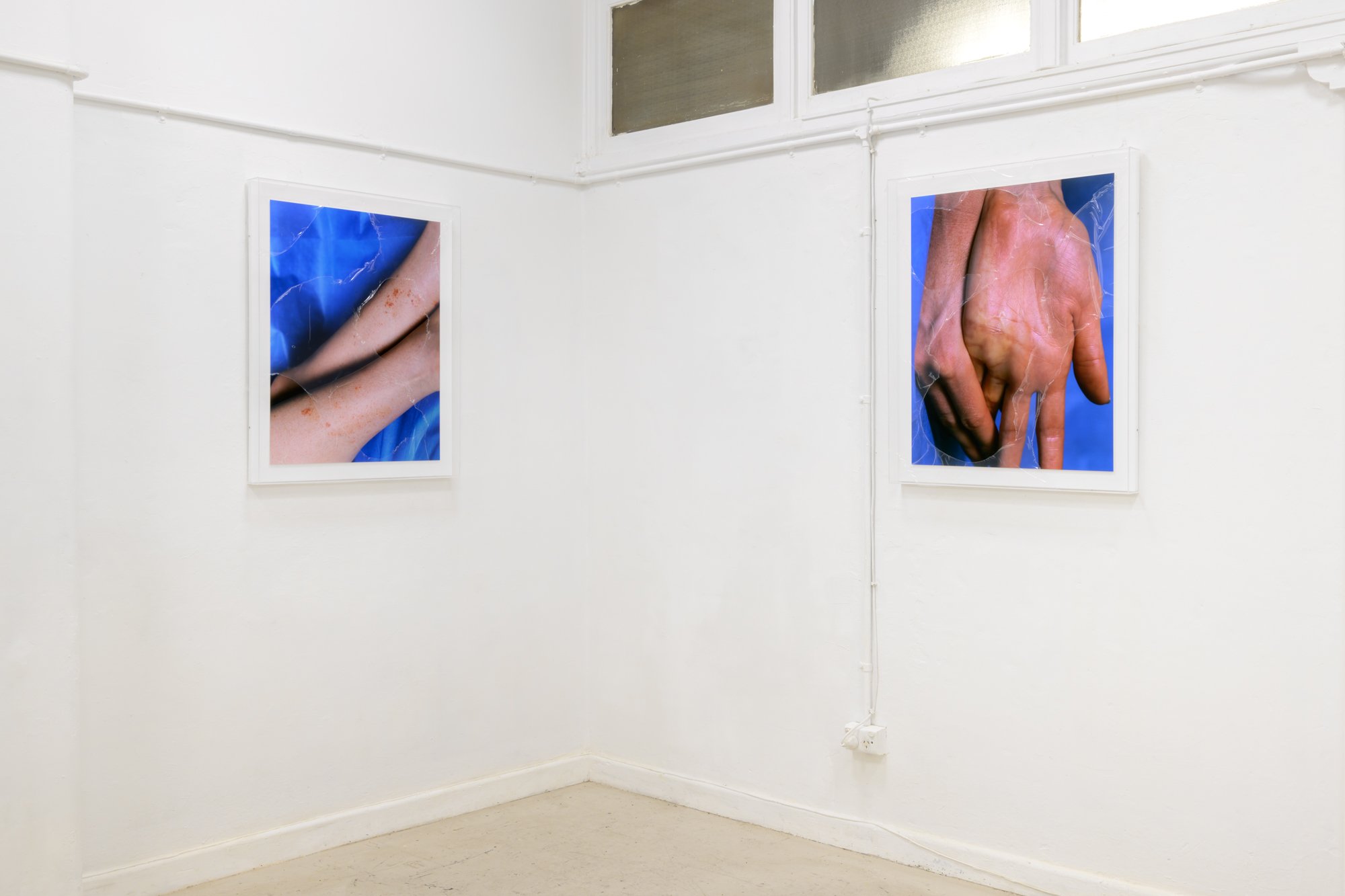
Recalcitrance Hyacinth Gallery, Naarm/Melbourne, solo exhibition, 2022. 1. Red-Eye, 2022, C-type print on Fuji Lustre, acrylic box frame. 2. Installation view. Red-Eye, 2022. Scintigraphy, 2022, HD video, LED TV, stereo sound, custom steel plinth, castors. 3-4. Hydro-C-Zone, 2022, C-type print on Fuji Lustre, acrylic box frame, window film. Compulsive Reflex, 2022, C-Type print on Fuji Lustre, acrylic box frame, window film. 5. Scintigraphy, 2022. Documentation Aaron Rees.
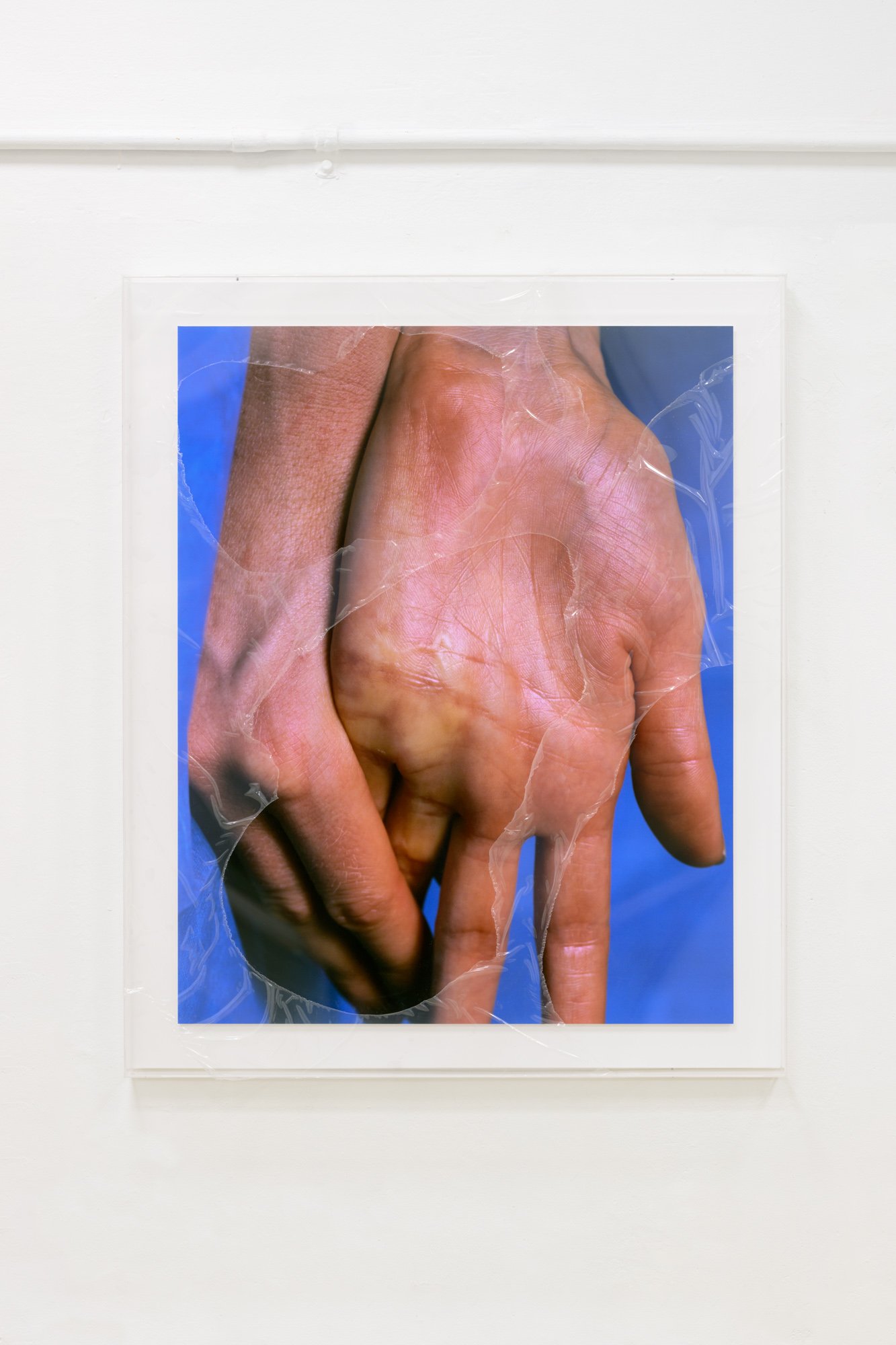
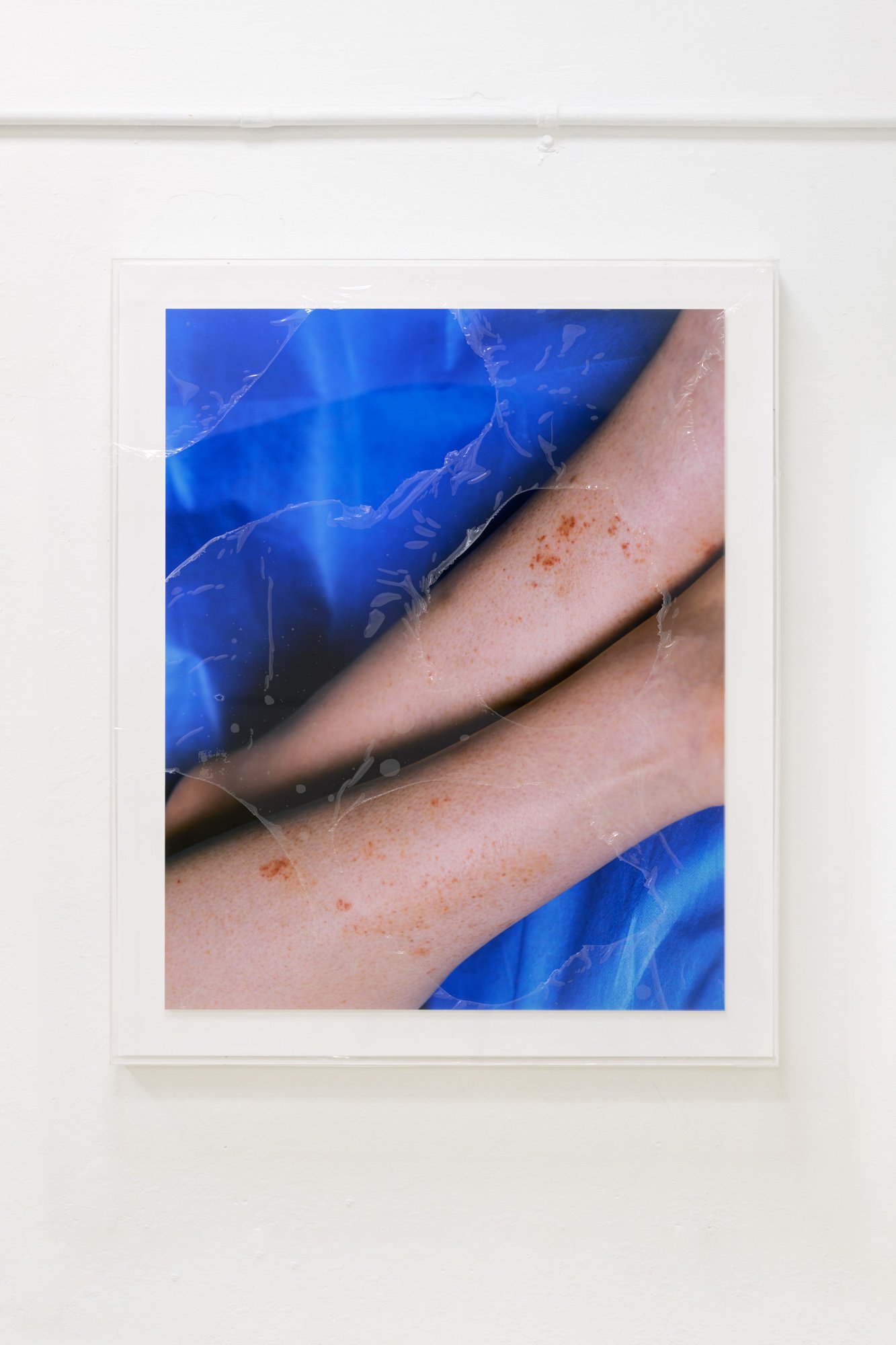
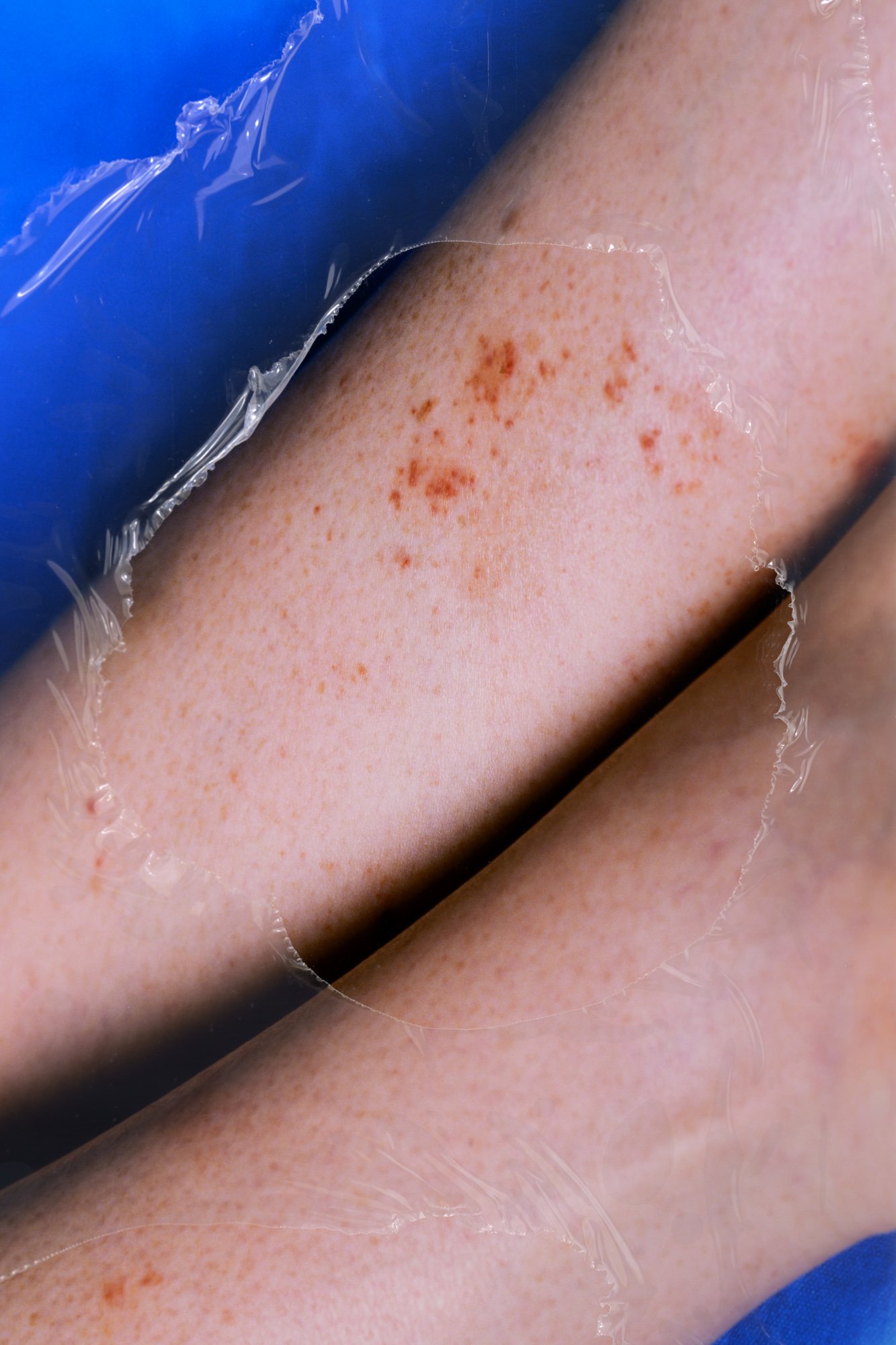
Recalcitrance Hyacinth Gallery, Naarm/Melbourne, solo exhibition, 2022. 1. Compulsive Reflex, 2022, C-Type print on Fuji Lustre, acrylic box frame, window film. 2. Hydro-C-Zone, 2022, C-type print on Fuji Lustre, acrylic box frame, window film. 3. Hydro-C-Zone (detail), 2022. Documentation Aaron Rees.
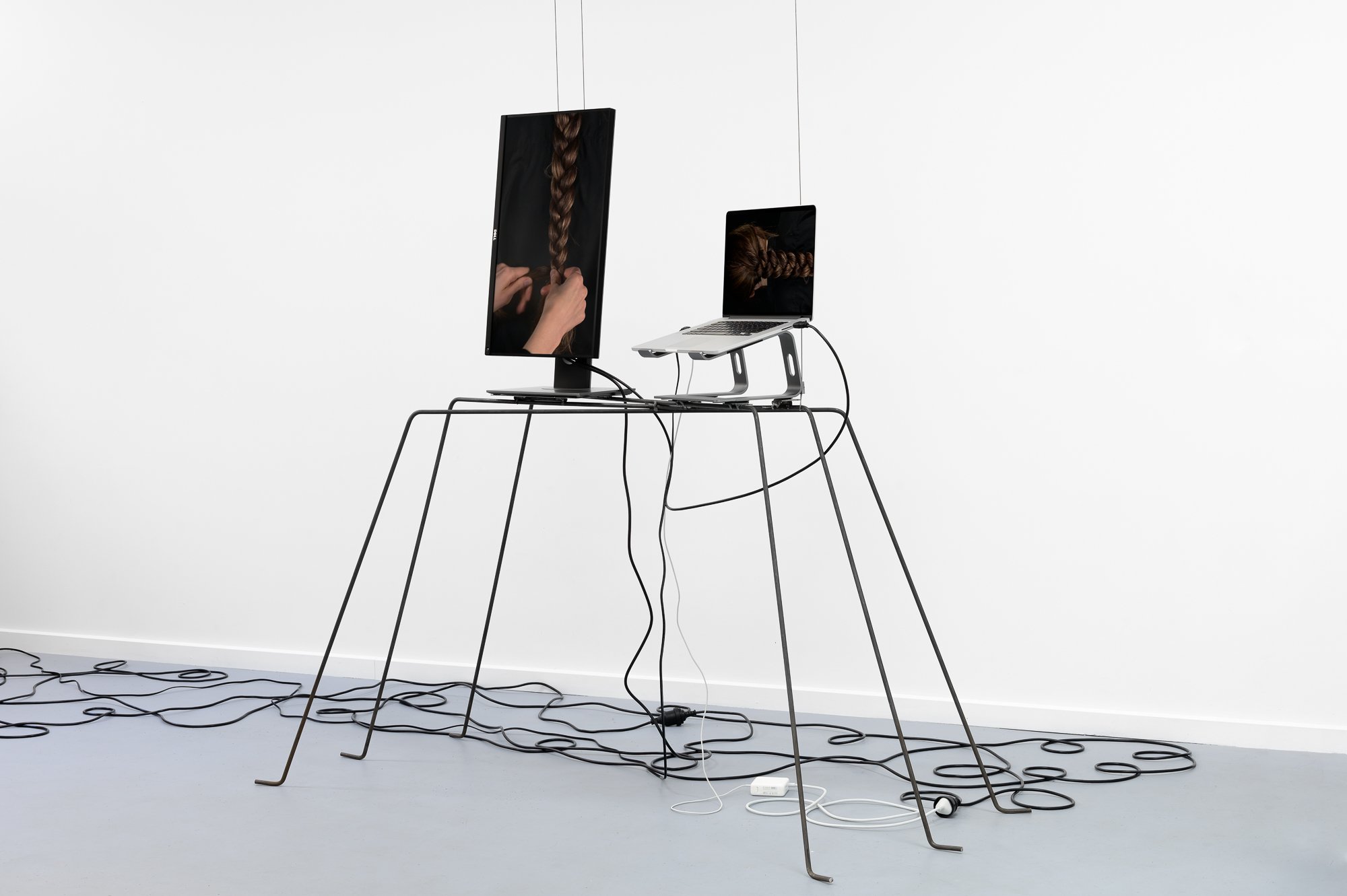
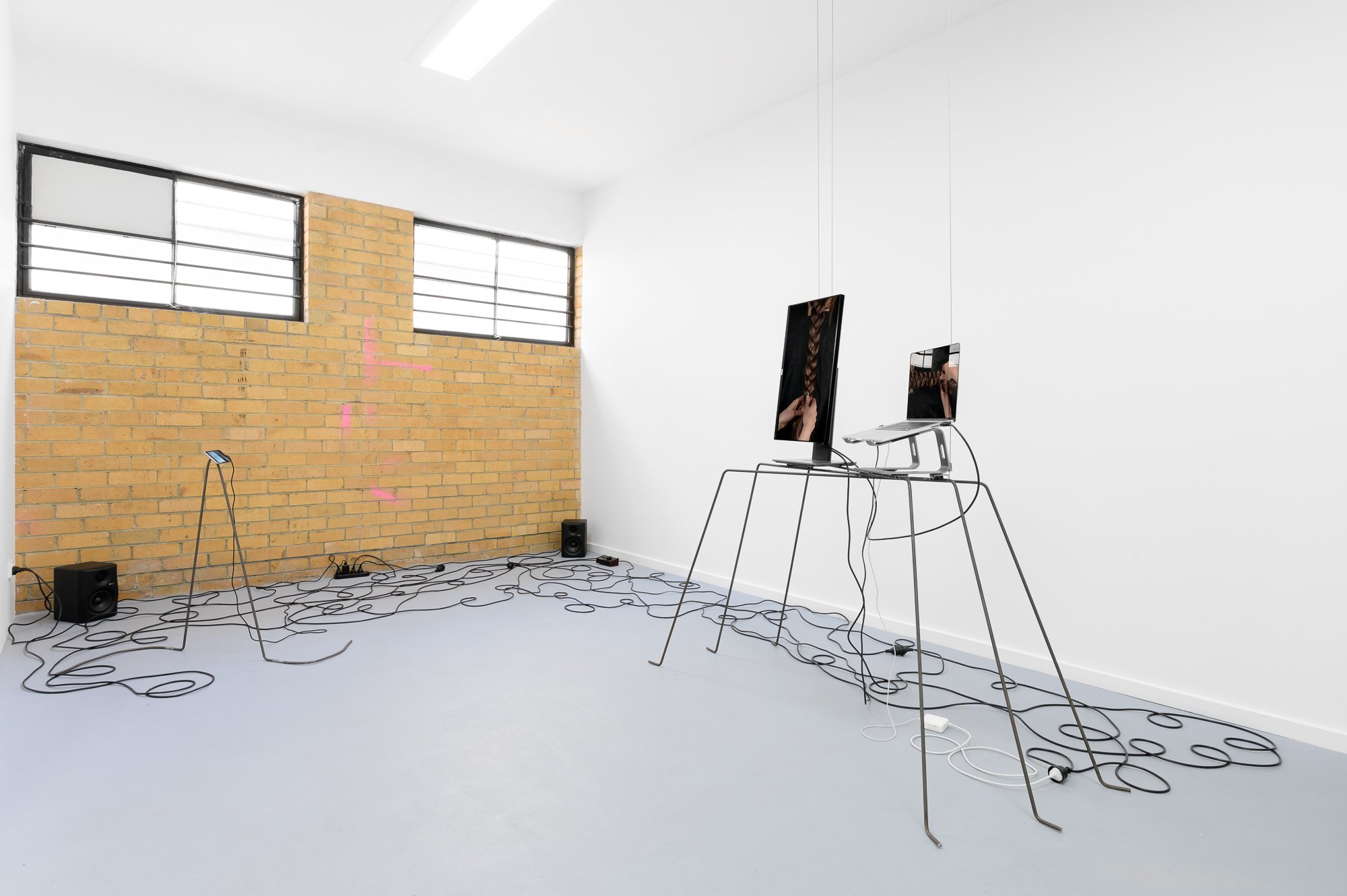
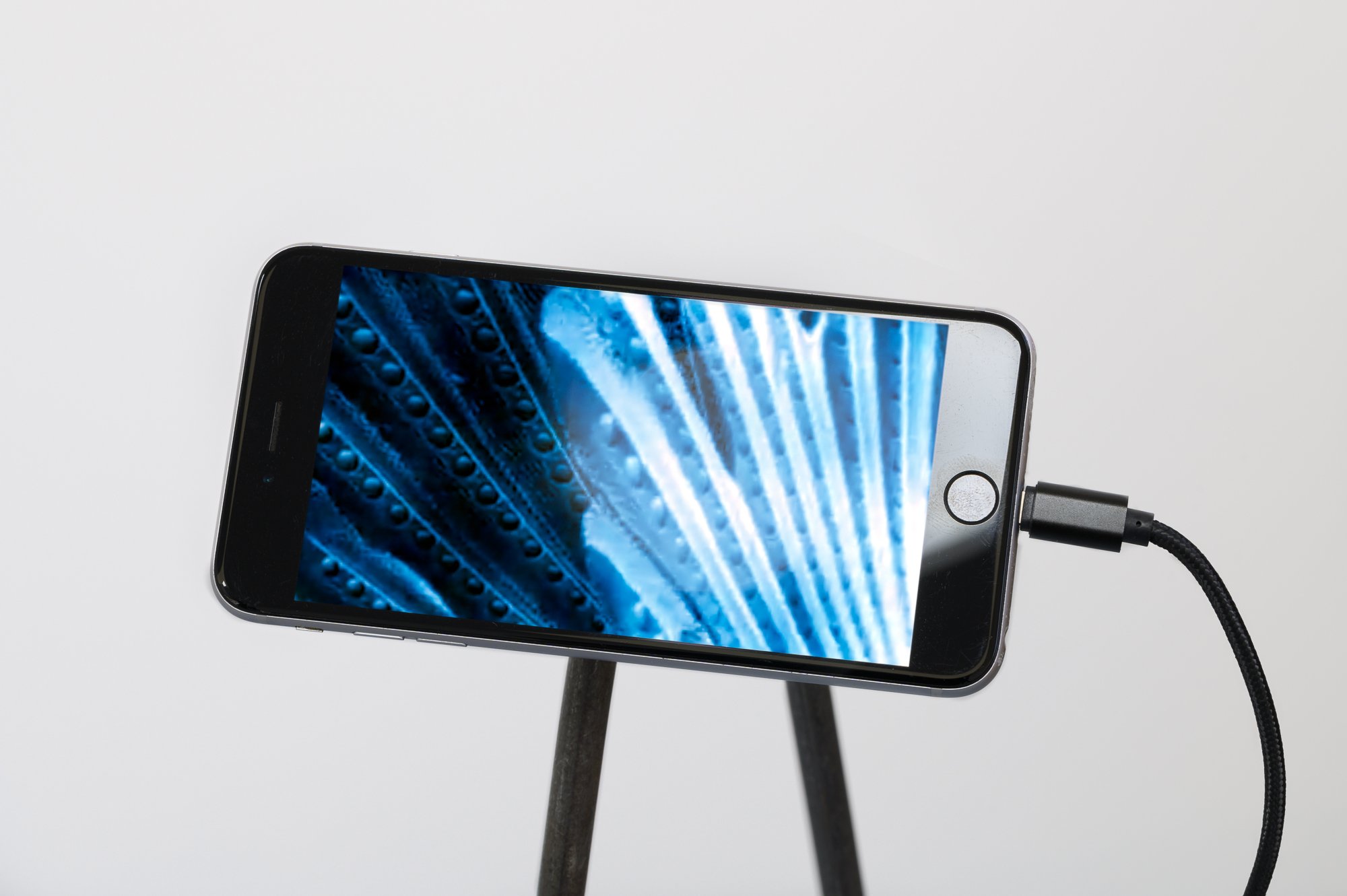
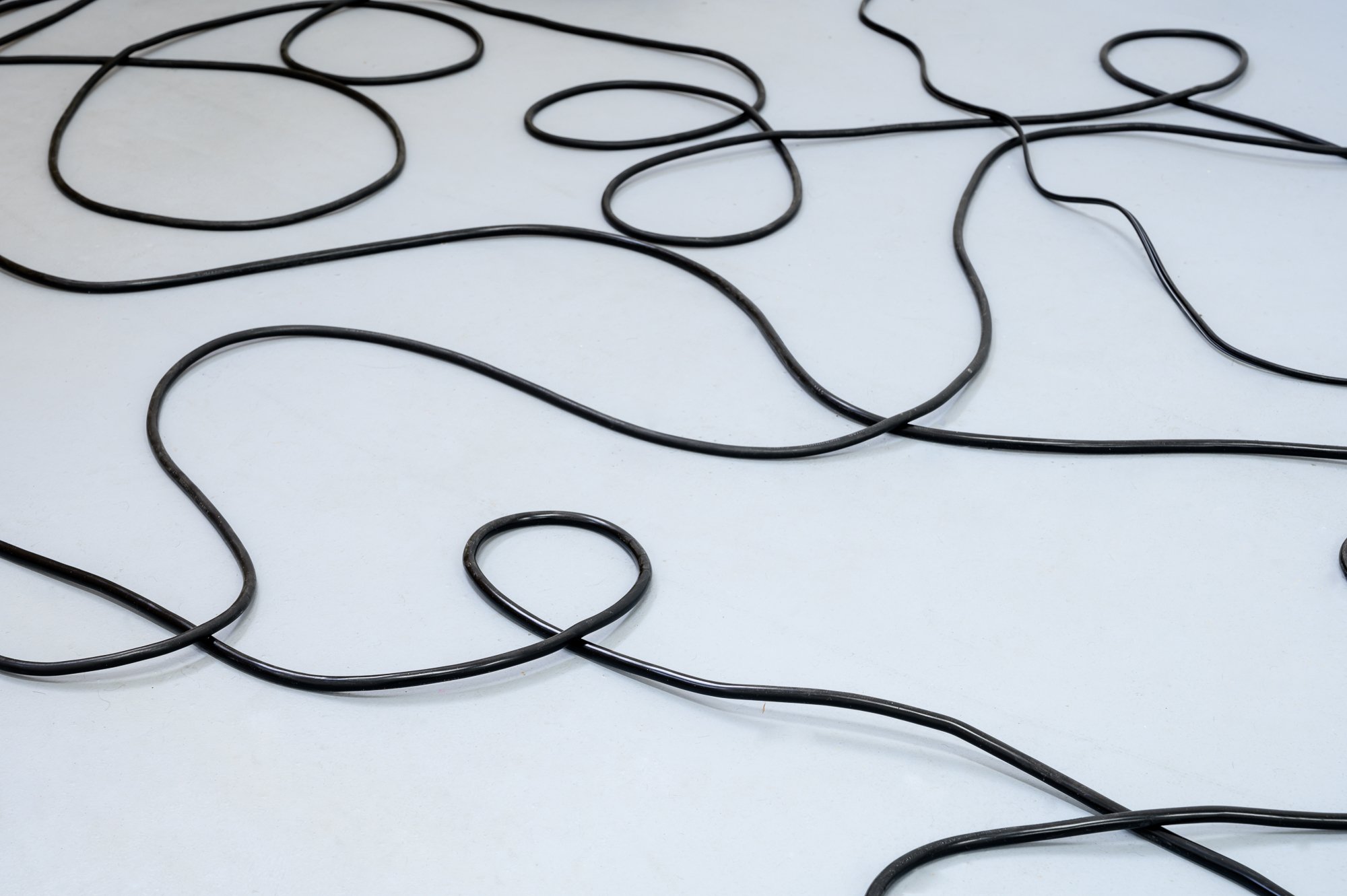
Hypnagogia Kings ARI, Naarm/Melbourne, solo exhibition, 2021. 1. Hypnagogia, HD video, desktop monitor, laptop, steel structure, extension leads, stereo sound and speakers. 2. An Incidental Observation, HD video, iPhone, custom steel structure. Documentation Aaron Rees.
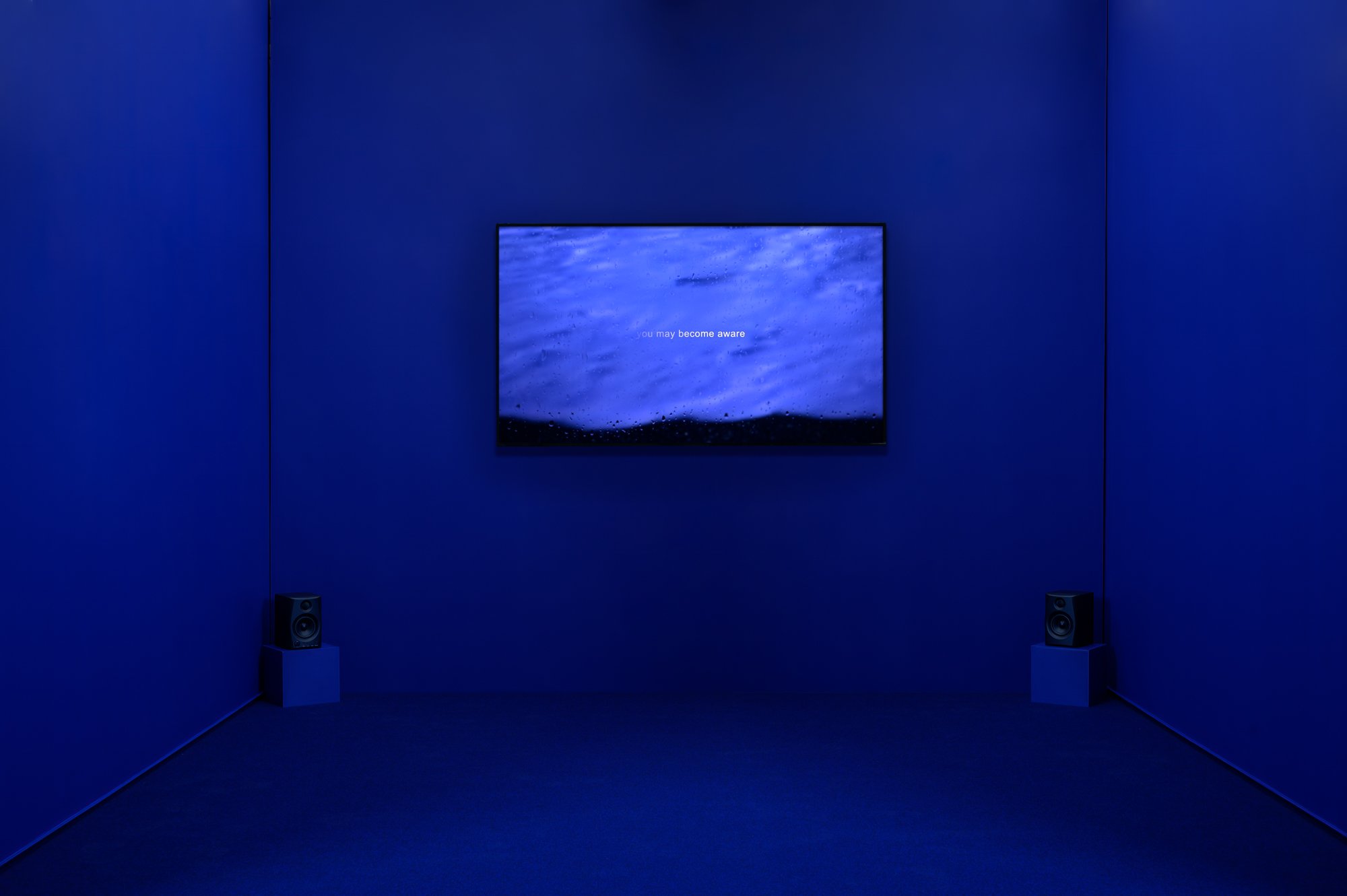
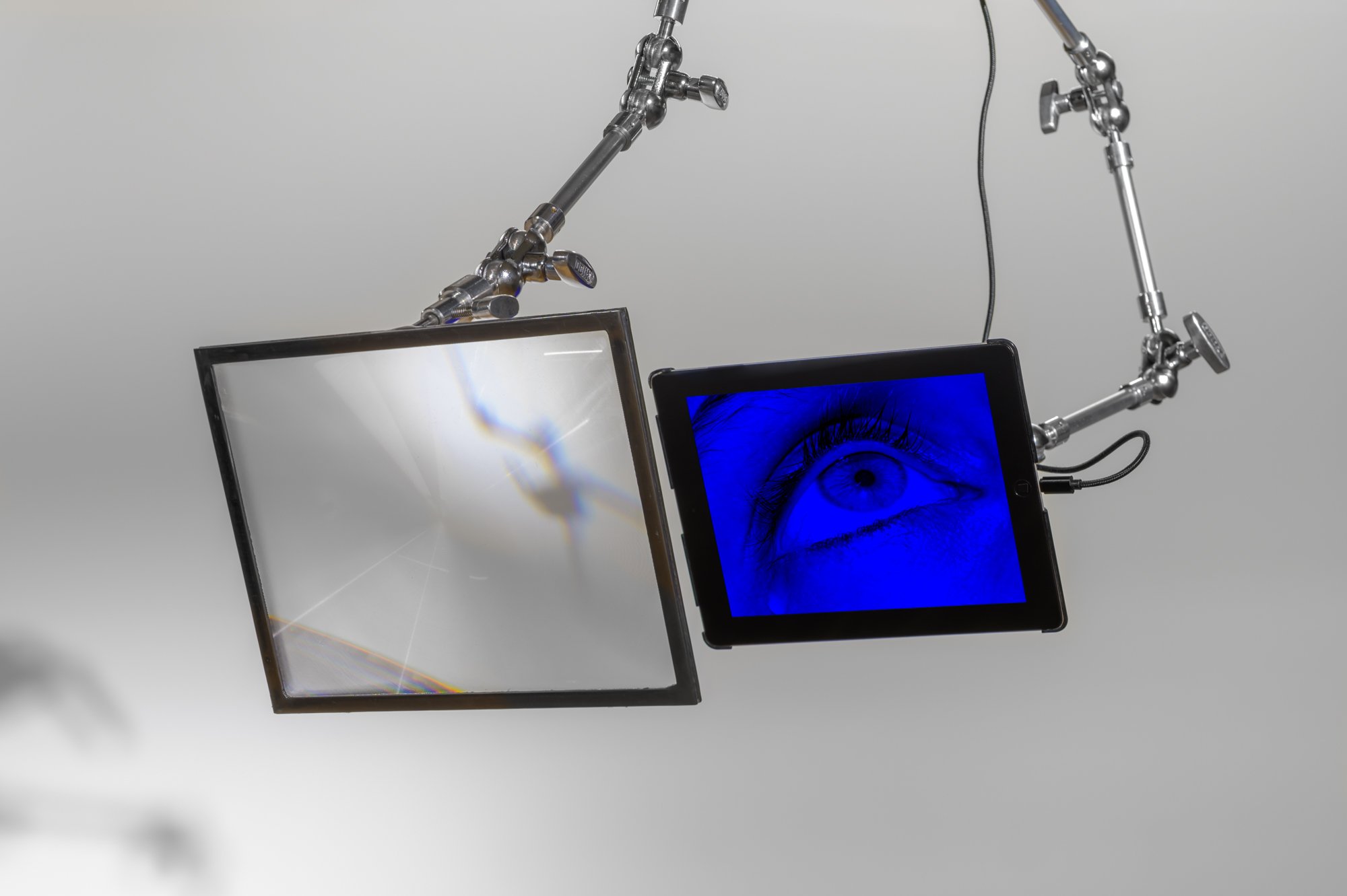
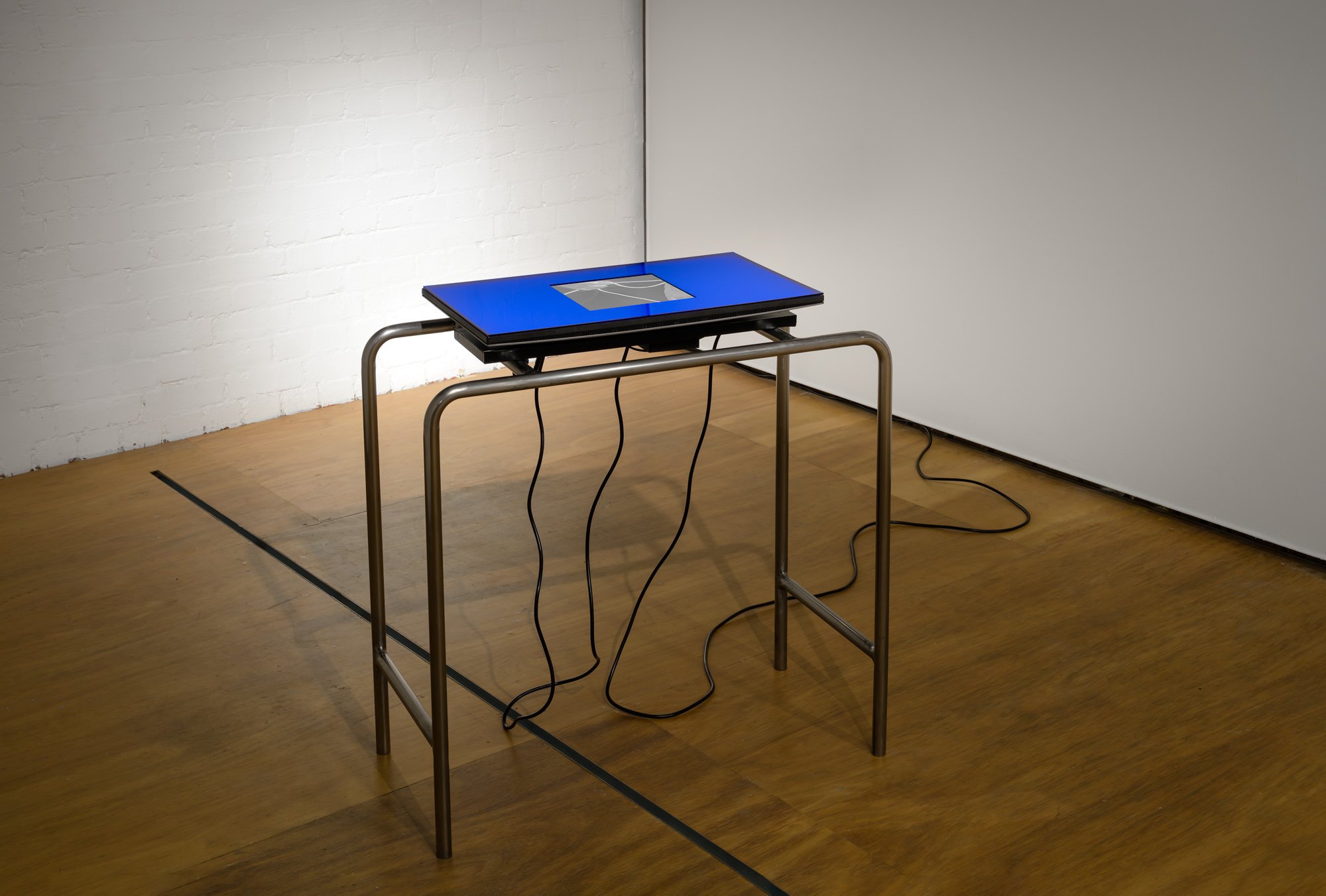
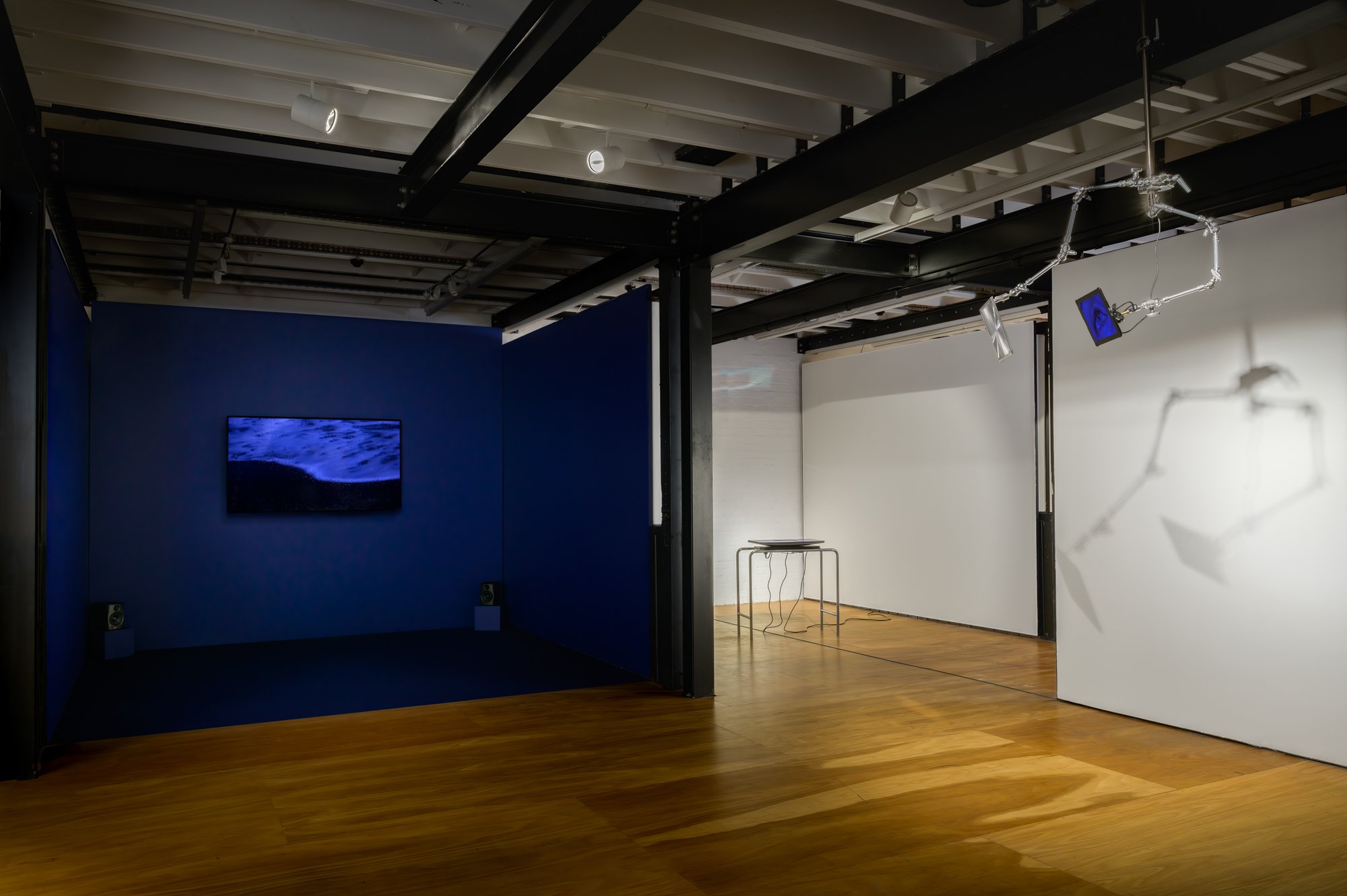
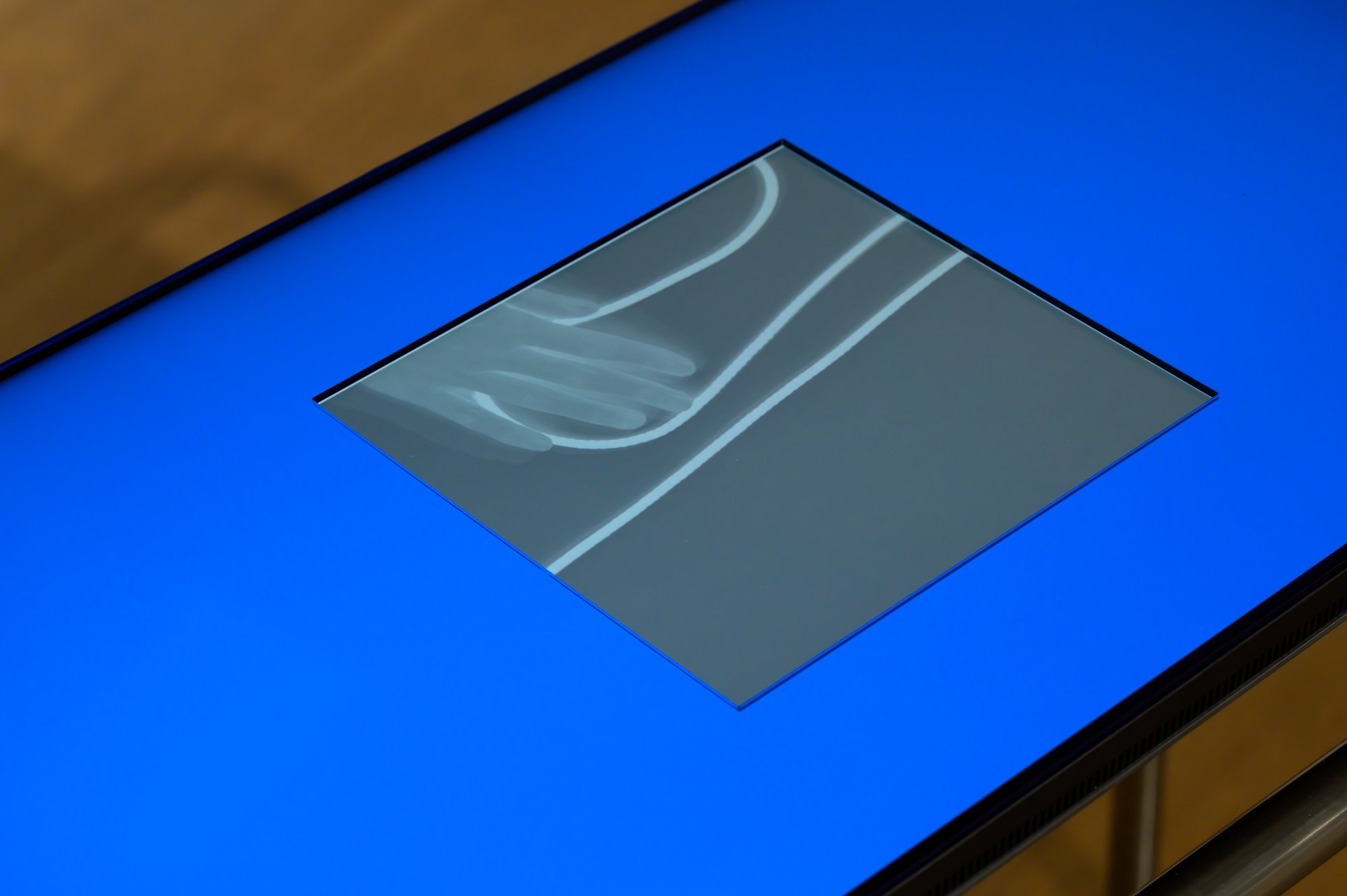
VCA Grad Show, 2021. 1. Virtual Window II, HD Video, LED screen, stereo sound. 2. I, HD video, iPad, magnifying screen with custom steel frame, steel and aluminium articulating arm. 3. X, HD video, LED monitor, custom steel frame, acrylic frame. Documentation Aaron Rees.
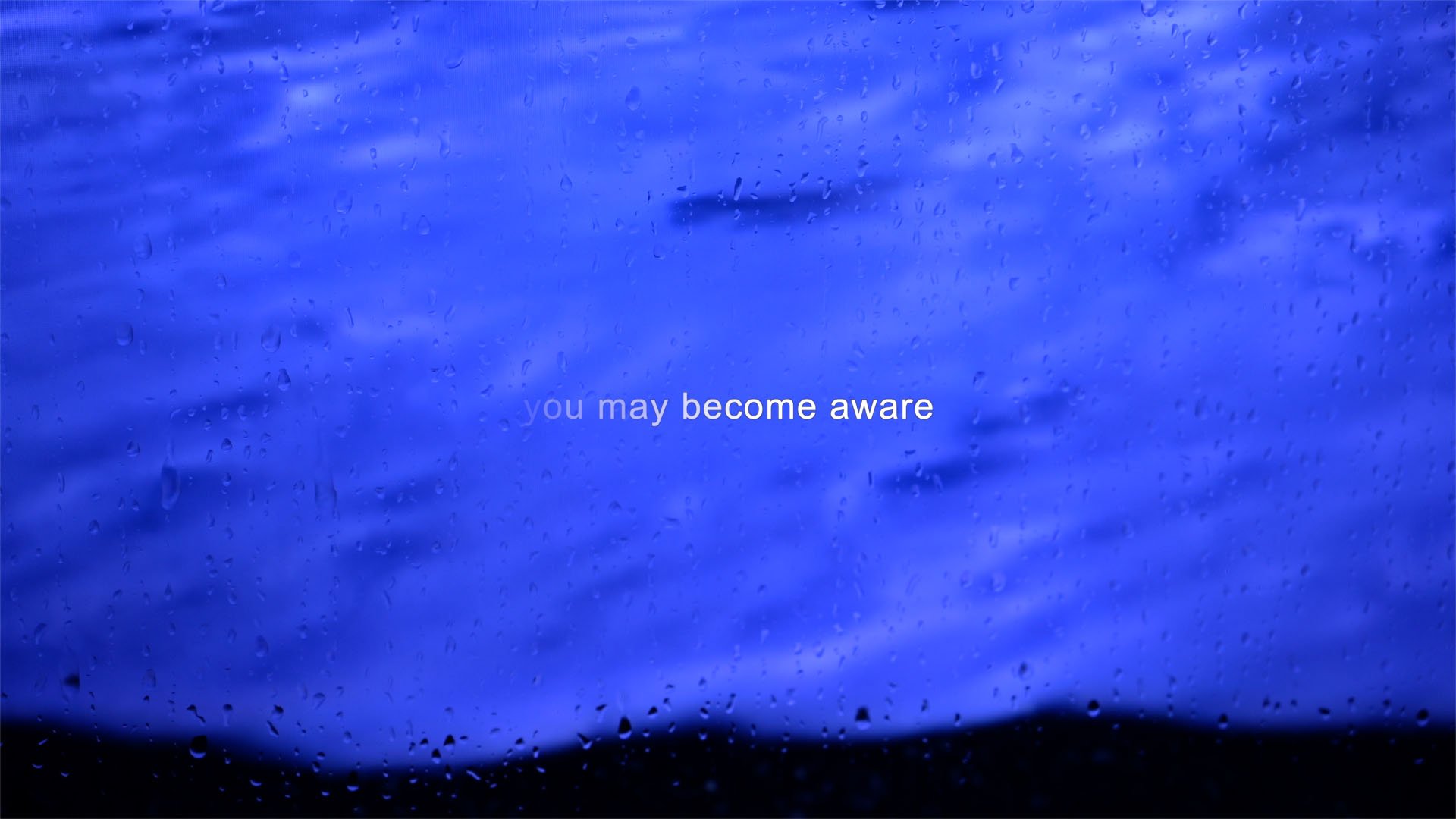
Virtual Window II, 2021. (Excerpt). HD video. Christina May Carey. Sound design Camryn Rothenbury.
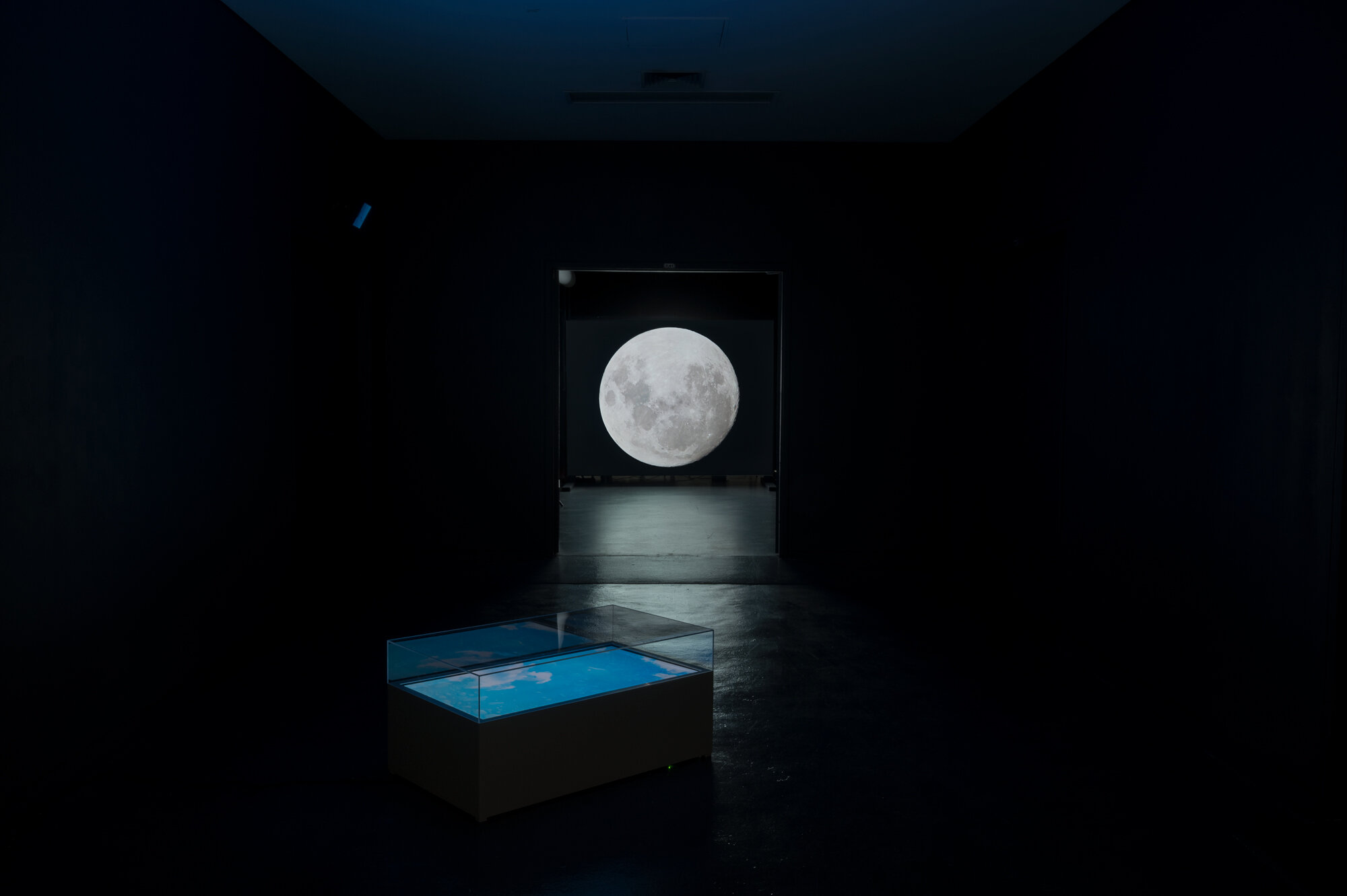
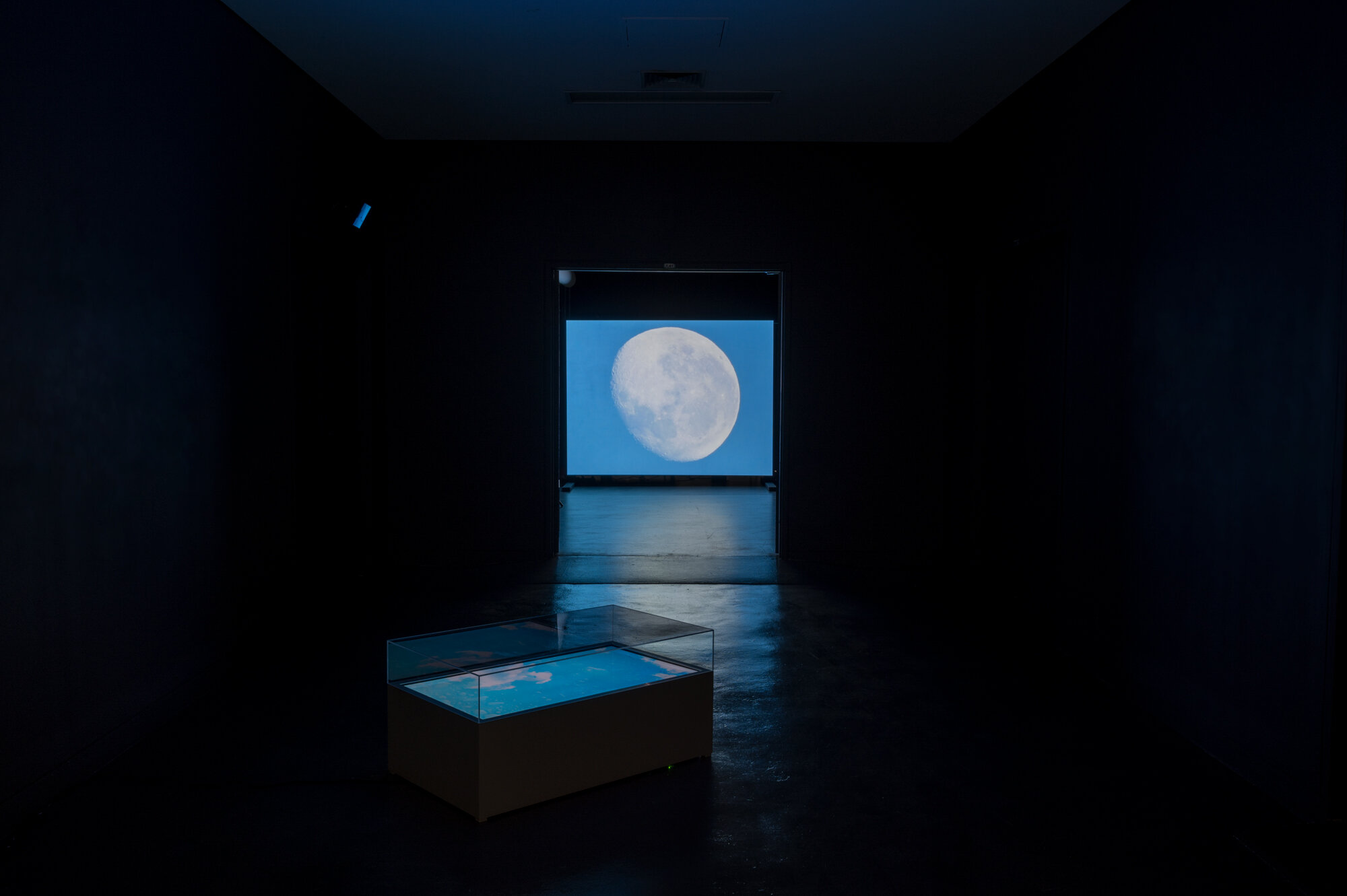
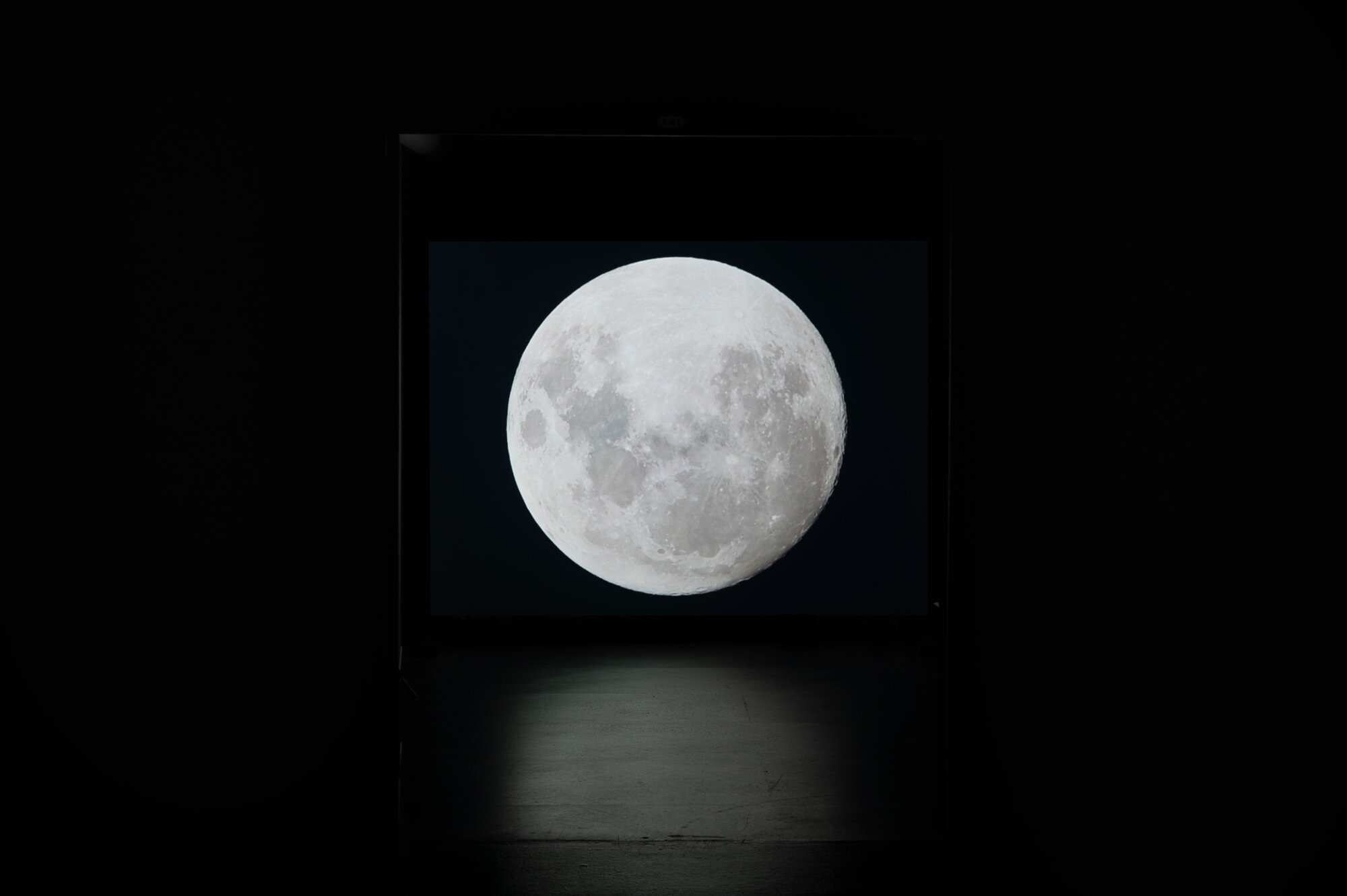
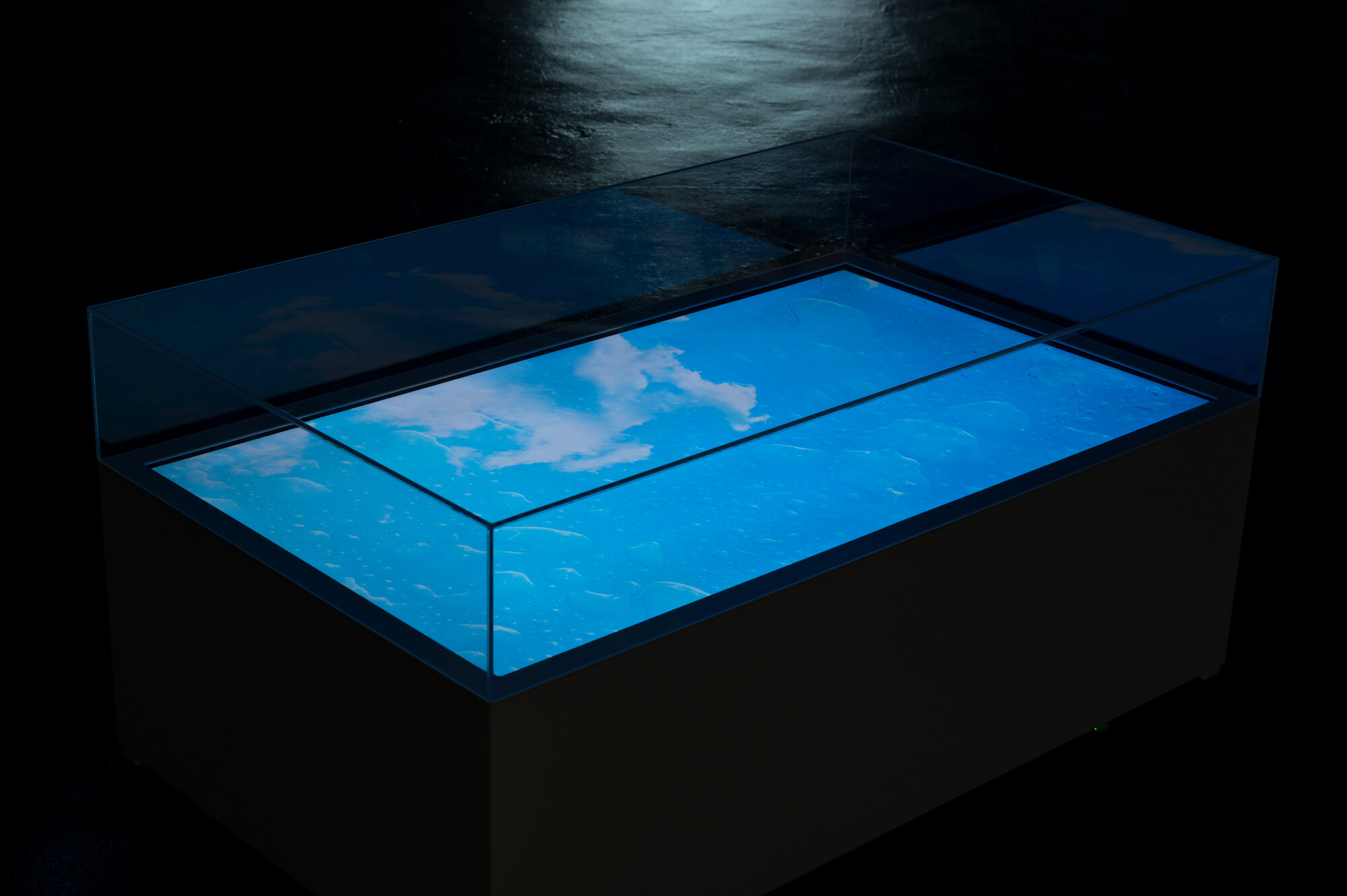
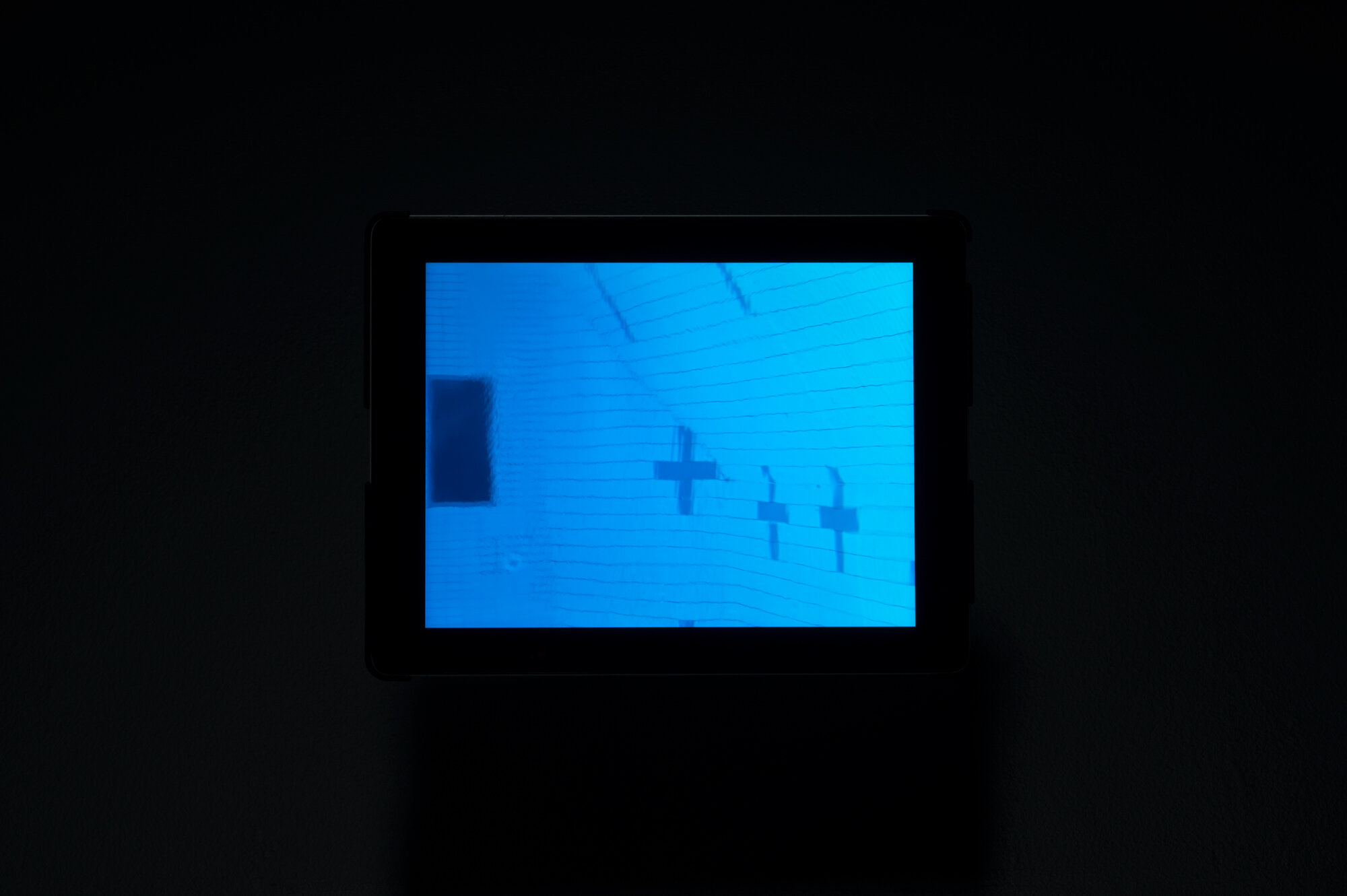
VCA Grad Show, 2020. Moon, HD video projection on MDF screen; Touch the Skylight, HD video on monitor, steel plinth and acrylic display case; and Pool, HD video on iPad. Documentation Aaron Rees.

Touch the Skylight, HD video, 2020. Exhibited at the Buxton Contemporary Screen Space, Naarm/Melbourne.
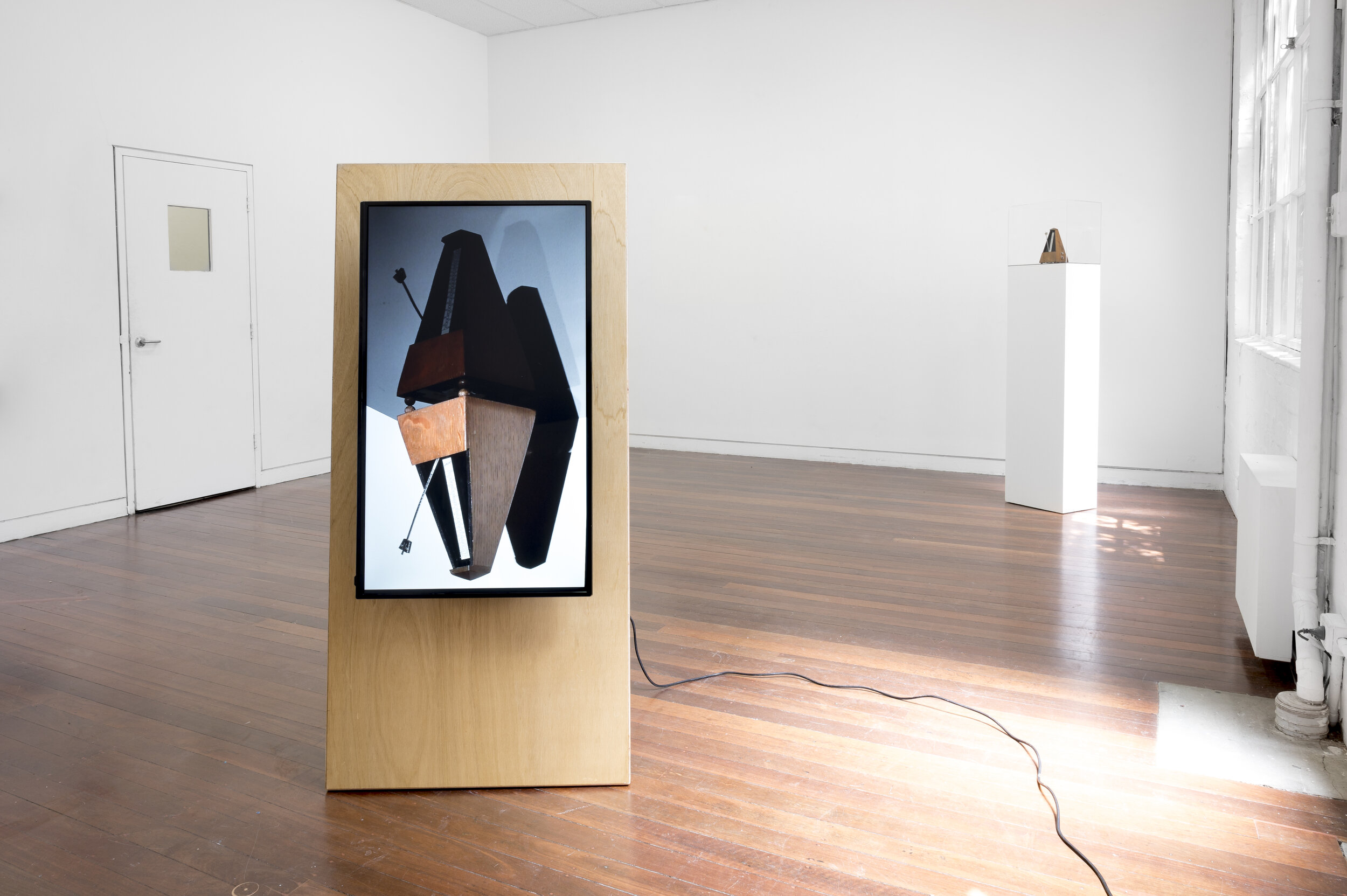
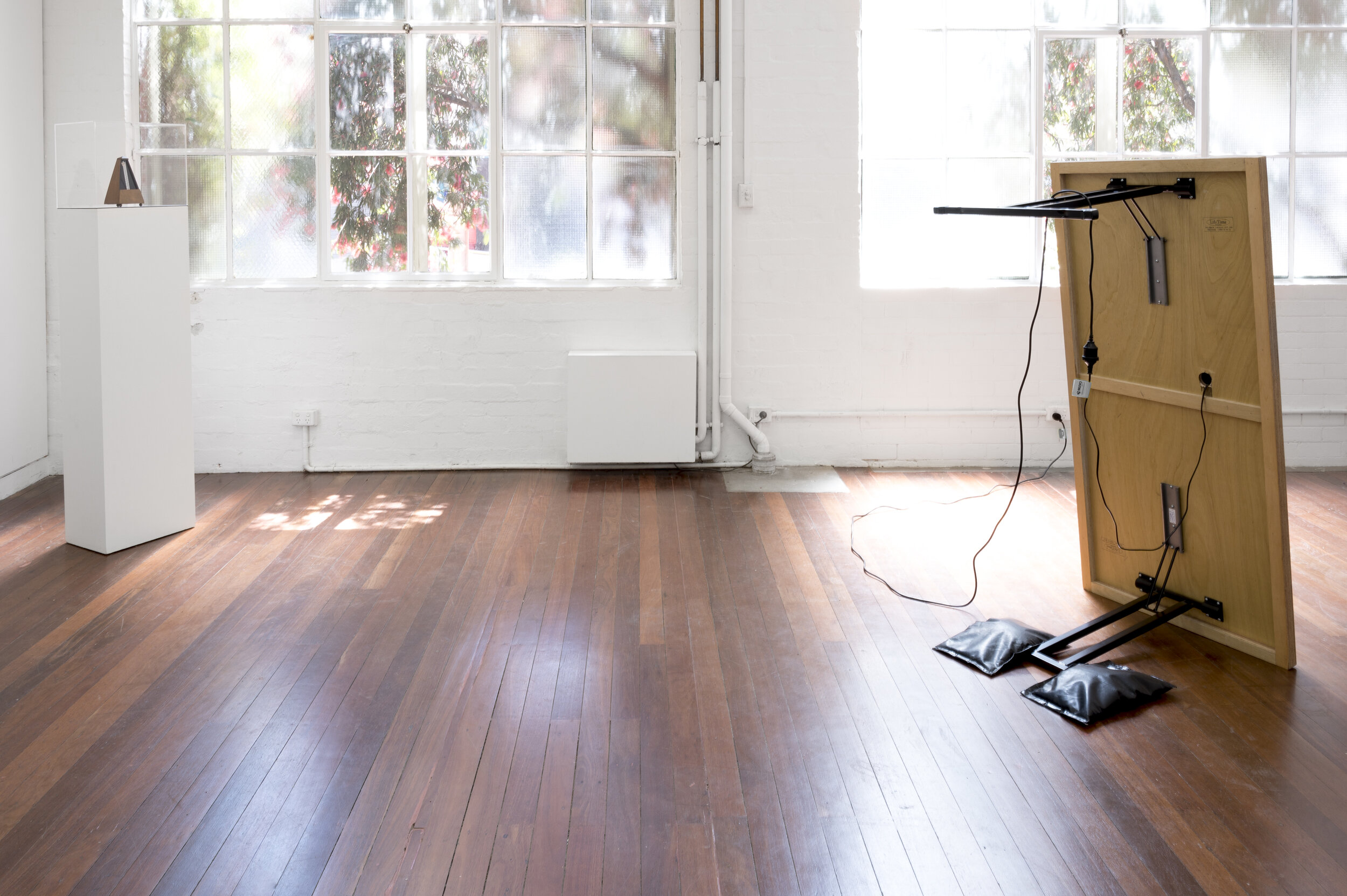
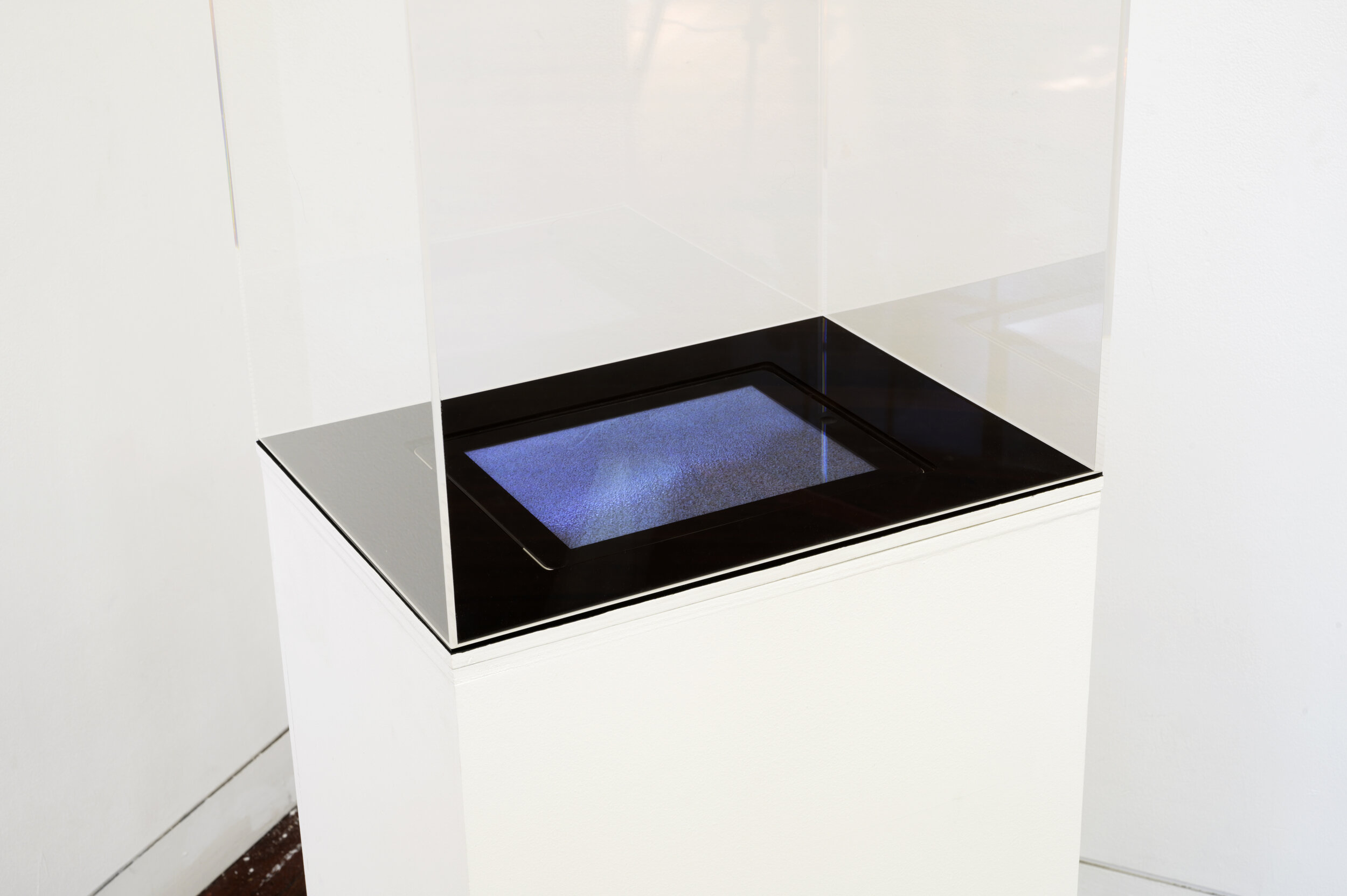
Time Held, 2019, HD video, desk; and plinth, acrylic display case, metronome. Time Elapsed, 2019, video on iPad, plinth and acrylic display case.

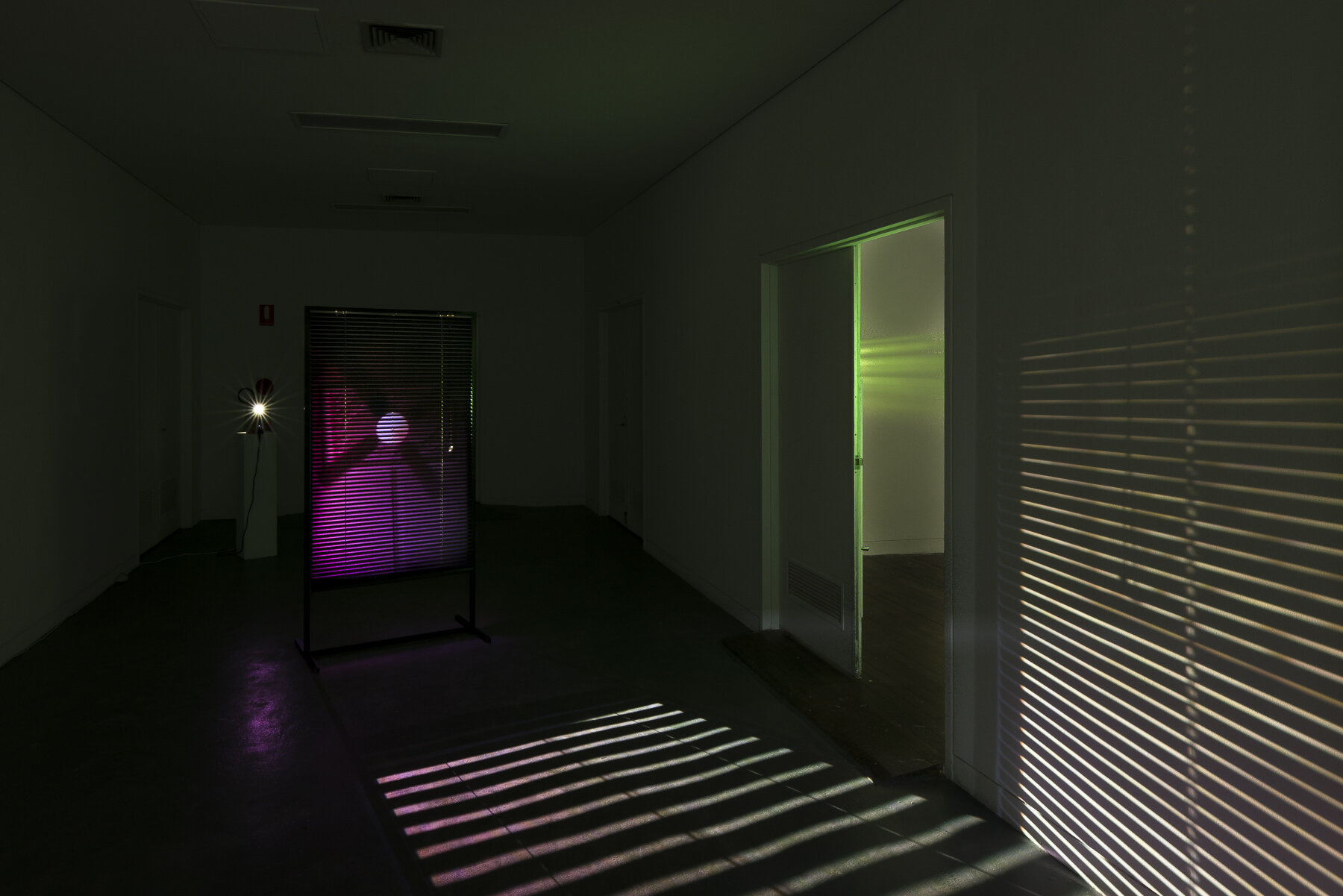
321 (Click) and 321 (Fan), 2018. HD video projections. Documentation Aaron Rees.